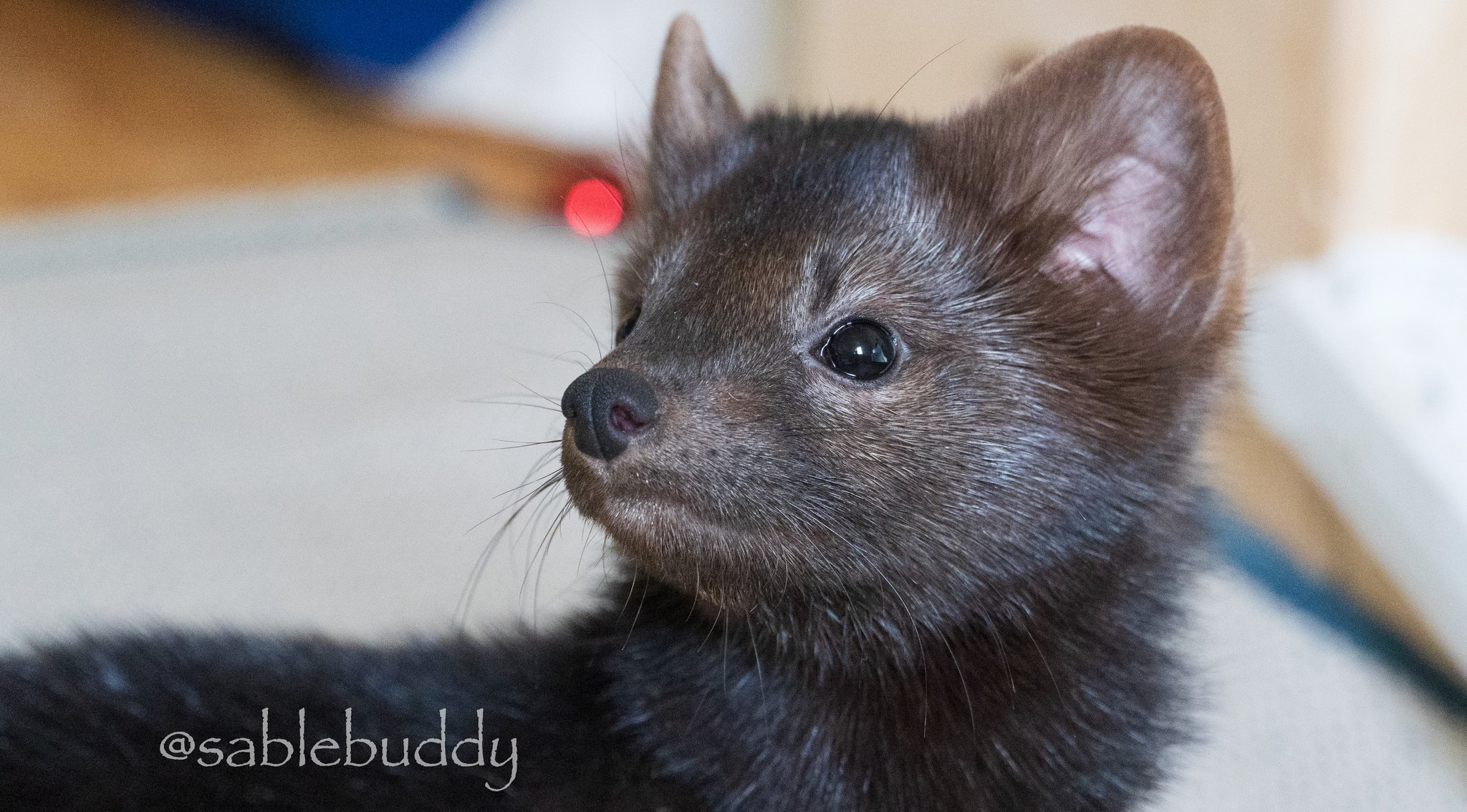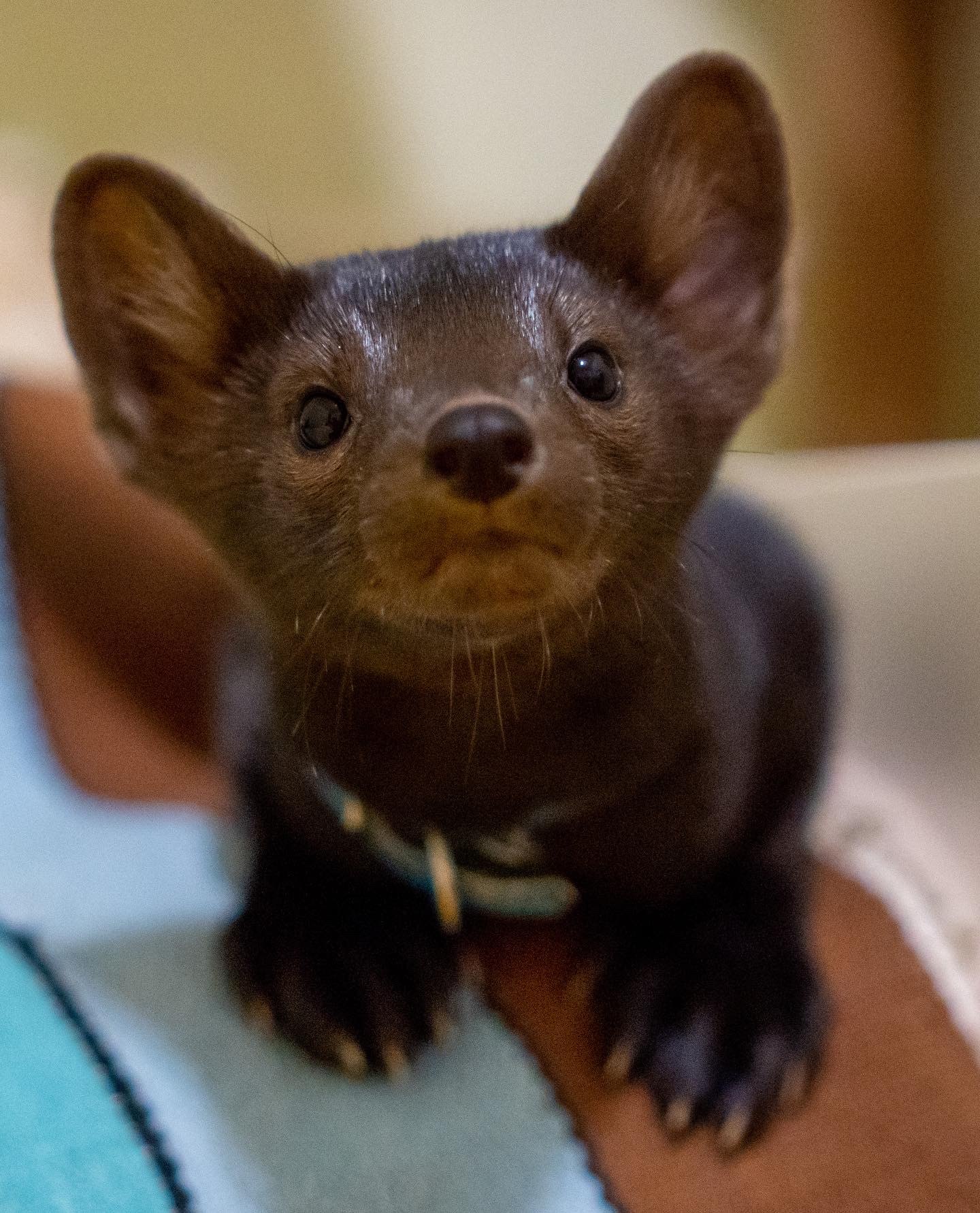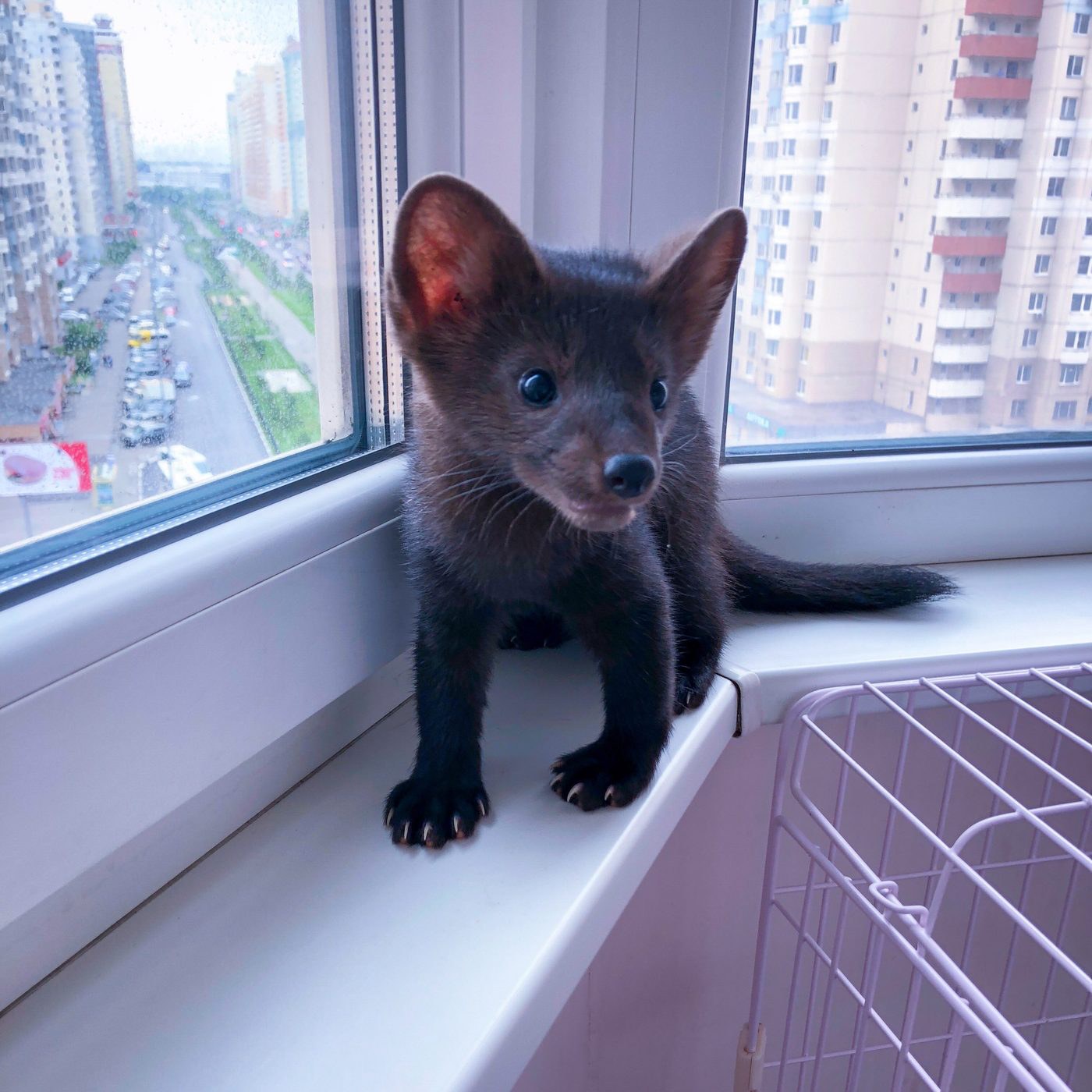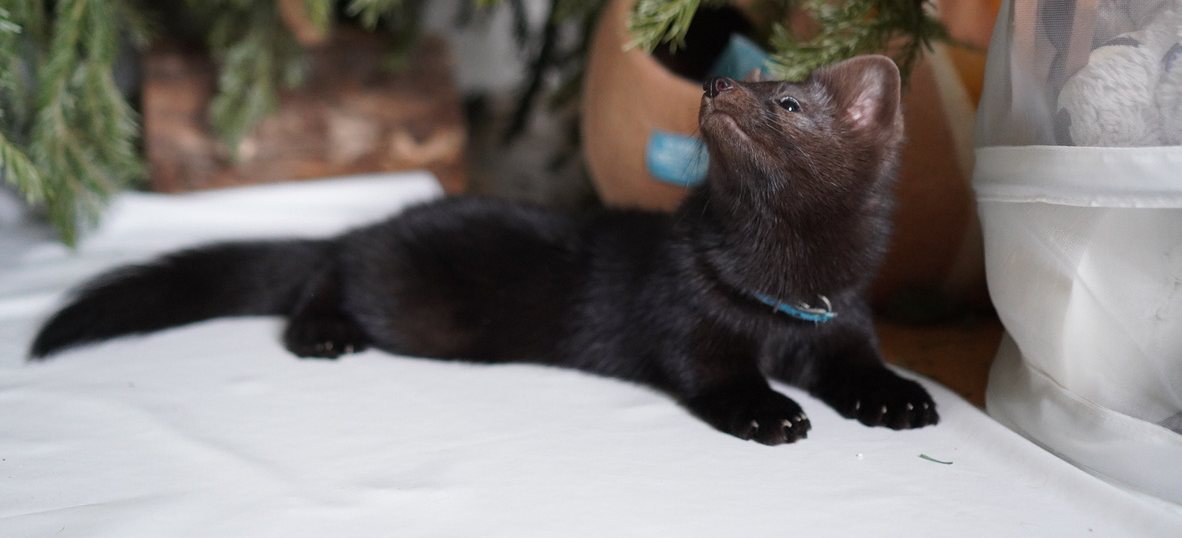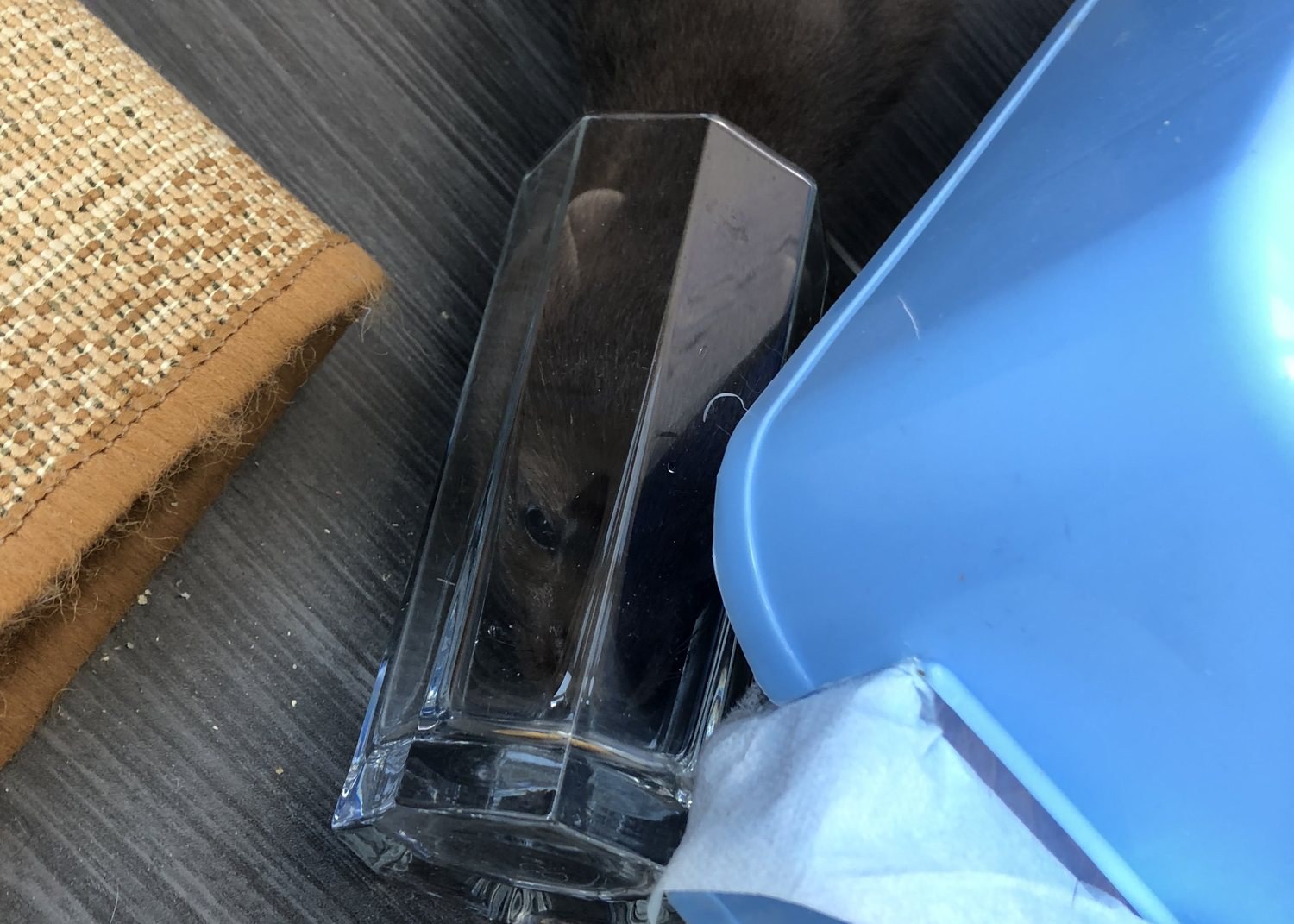
I adore Buddy. To me he is a completely unique animal, and I have never regretted for a second that he came into my life. But if I were asked to name a pet I could calmly recommend to other people, the sable would be somewhere at the very bottom of that list.
Because a sable is not a small fluffy cat and not an exotic pet for pretty photos. He is a semi-domesticated predator who can learn to live alongside a human and form a very strong bond with one. But that does not make him a pet in the usual sense of the word.
The sable's main advantage is the sable himself
Let me start with the good part.
A sable is incredibly interesting.
He is smart, fast, curious, emotional and interacts intensely with the world around him. His intelligence is comparable to that of a three-year-old child. Living with a human, a sable learns to read human signals and even pointing gestures — something only certain dog breeds, monkeys and octopuses can understand.
That is why watching a sable stays fascinating even after years. He is not an animal that simply exists somewhere nearby for most of the day. He is constantly watching, studying, testing, remembering and learning to live together with you.
He has a personality. Favourite activities, habits, ways of getting what he wants, moods, and a perfectly obvious opinion about different people.
If a sable trusts you, the relationship can be very close. And that trust is precious precisely because it is never given automatically.
The sable was not selected by humans for thousands of years to be convenient, obedient and eager to please us. His affection has to be earned.
And when an animal like that comes to you on his own, wants to play, seeks contact, sleeps beside you or includes you in his life — it is a completely special feeling.
For me, that is the main plus.
But almost every other sable trait sits somewhere between “difficult” and “what on earth just happened”.
A sable destroys things
Not “might occasionally damage something”.
Destroying his surroundings is part of his normal behaviour.
A sable explores the world with teeth, paws and a huge amount of energy. He can climb into places you would consider physically impossible. He can open, tear off, pull out, chew through or carry away an object that has nothing to do with him at all.
Destruction is an instinct. In nature, if you peel bark off a tree, there may be a tasty grub underneath. And since you have no trees at home, your sable will be peeling your wallpaper — and possibly your sofa upholstery.
If you treasure your interior, your belongings and perfect order, you will struggle.
A home with a sable has to be adapted to the sable much the way you would adapt it to a very inventive toddler — except this toddler can run up walls, squeeze through cracks and has the teeth of a predator.
You cannot just let him loose in the flat and forget
A sable needs a safe space.
Windows, balconies, gaps, furniture, wires, household chemicals, plants, small objects — a huge number of perfectly ordinary things can turn out to be dangerous.
And a cage does not solve the problem.
A sable should not spend his life locked in a small cage just because that is more convenient for the human. He needs movement, exploration, play and exercise.
So the real question is not “where do I put the cage?” but “am I ready to rebuild part of my home around an animal?”.
A sable demands a great deal of attention
Especially a young one.
It is not enough to pour in food, change the water and pet him for five minutes in the evening.
You have to interact with him. Play. Give him room to explore. Invent activities. Watch his safety. Teach him the rules of living with a human.
And no, you cannot hand him over to a cat, a dog or another sable so he won't be bored — you will pay dearly for that solution. More on that in our guide.
A bored sable is perfectly capable of finding entertainment on his own.
You will almost certainly not like the entertainment he finds.
He will bite
And this is one of the points that must not be romanticised.
A sable has sharp teeth and a very fast reaction. He may use his teeth in play, when overexcited, out of fear, when guarding a resource, or simply because that is how animals of his species interact.
A young sable has to be taught the rules of interacting with humans.
And punishment built on fear and physical force can destroy trust and make the problem worse.
If the very thought that your pet is capable of seriously biting you frightens you — a sable is not for you.
The toilet can become a life drama of its own
Do not expect the cat scenario: set out a litter box, show it once, case closed.
Even if a sable perfectly understands where the toilet is, that does not mean perfect accuracy for the rest of his life.
He may have favourite spots. New spots may appear. Sometimes the logic of toilet selection will be known only to the sable himself.
Some spots are chosen for marking, some for the toilet. To you it looks the same; to him the difference is enormous.
If it is critical for you that an animal always, without exceptions, goes in one specific place — choose a different animal.

The litter Buddy uses
Dr. Elsey's Ultra Cat Litter
Holidays, moving house and vets get harder
With a dog or a cat you can find a hotel, a sitter or a vet in practically any big city.
With a sable, your options shrink dramatically.
You need a person who does not just love animals but understands what kind of animal they are dealing with. You need a vet willing to work with an exotic predator. If you move to another country, you have to check the legislation and keeping rules separately.
Spontaneity shrinks noticeably once a sable appears.
Other animals are a separate risk
A sable remains a semi-domesticated predator.
Even if a particular sable lives beautifully next to a particular dog or cat, you cannot conclude that such cohabitation is always safe.
Extra caution is needed with small animals.
And I definitely do not recommend getting two sables just because it seems one would be bored.
For a sable, the right environment and the relationship with a human matter far more than an automatically issued “friend of the same species”.
A sable is a poor fit for small children
This is a fast animal, strong for its size, with sharp teeth.
A child may accidentally frighten him, grab him, corner him or react wrongly to play. The sable, in turn, is capable of responding the way a semi-wild animal responds — not the way an adult would like a “pet” to respond.
I would not consider a sable as a family pet for a small child.
You will not get full control
This is possibly the most important thing on the whole list.
A sable may know the rules and still periodically test them.
He may understand what you want — and choose otherwise.
He may calmly accept a situation today that will excite or anger him tomorrow.
If obedience and predictability matter to you, a sable will constantly test your patience.
Life with him is built not on absolute control but on managing the environment, consistent rules and trust.
So why do people fall in love with sables?
Because behind all these difficulties there is a completely amazing animal.
A sable is funny. Inventive. Beautiful. Sometimes incredibly tender. He is fascinating to watch and fascinating to interact with.
He is capable of building a very deep relationship with a human.
But that is exactly where the trap lies.
On the internet you mostly see the result of that relationship: a sable playing, coming to his owner, lounging on the bed, stealing some object and looking adorable.
You do not see the hundreds of hours the person spent on adapting the space, upbringing, play, cleaning, problem-solving and building trust.
A beautiful relationship with a sable is possible.
But it does not come in the box together with the sable.
Who a sable is definitely not for
Do not get a sable if you need a calm pet, if you are away from home a lot, are not ready to change your space for an animal, take damaged belongings or bites hard, want guaranteed cleanliness, or expect the animal to follow your demands simply because you are the owner.
And especially do not get a sable for the sake of an unusual pet, pretty videos, or because you once saw a cute sable on the internet.
A cute sable on the internet lasts thirty seconds.
Life with a sable lasts years.
So — should you get a sable?
For most people — no.
And I consider that a perfectly normal answer.
If after everything listed above you are thinking “No, this is definitely not for me”, then this article has done its job.
But if you read to the end, understand the scale of the problems and are still seriously considering a sable — then read the full guide.
It explains how to prepare your home, how to build trust, how to play, feed, set rules, solve problems with biting and the toilet, and organise life so that it is good not only for the human but for the sable himself.
Because if you are taking responsibility for a semi-wild animal, you first need to understand exactly what kind of life you are committing to give him.