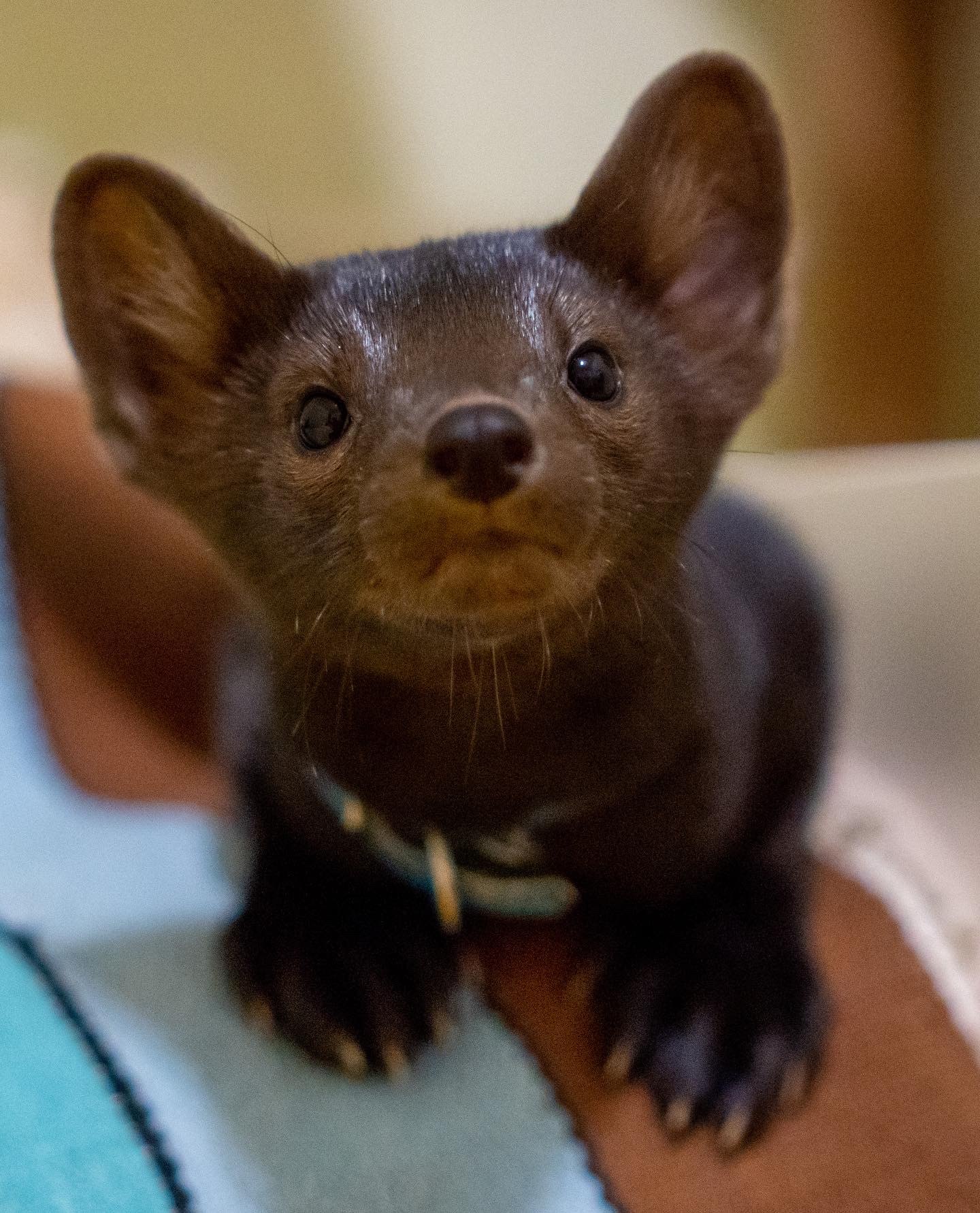
1.Origin and Selection
Where does he even come from. Not from under a stump in the forest, but from a fur farm, where directed selection has been going on for a hundred years now. The selectors are interested in exactly one detail — his coat. But to get that coat, a number of the animal's traits had to be changed.
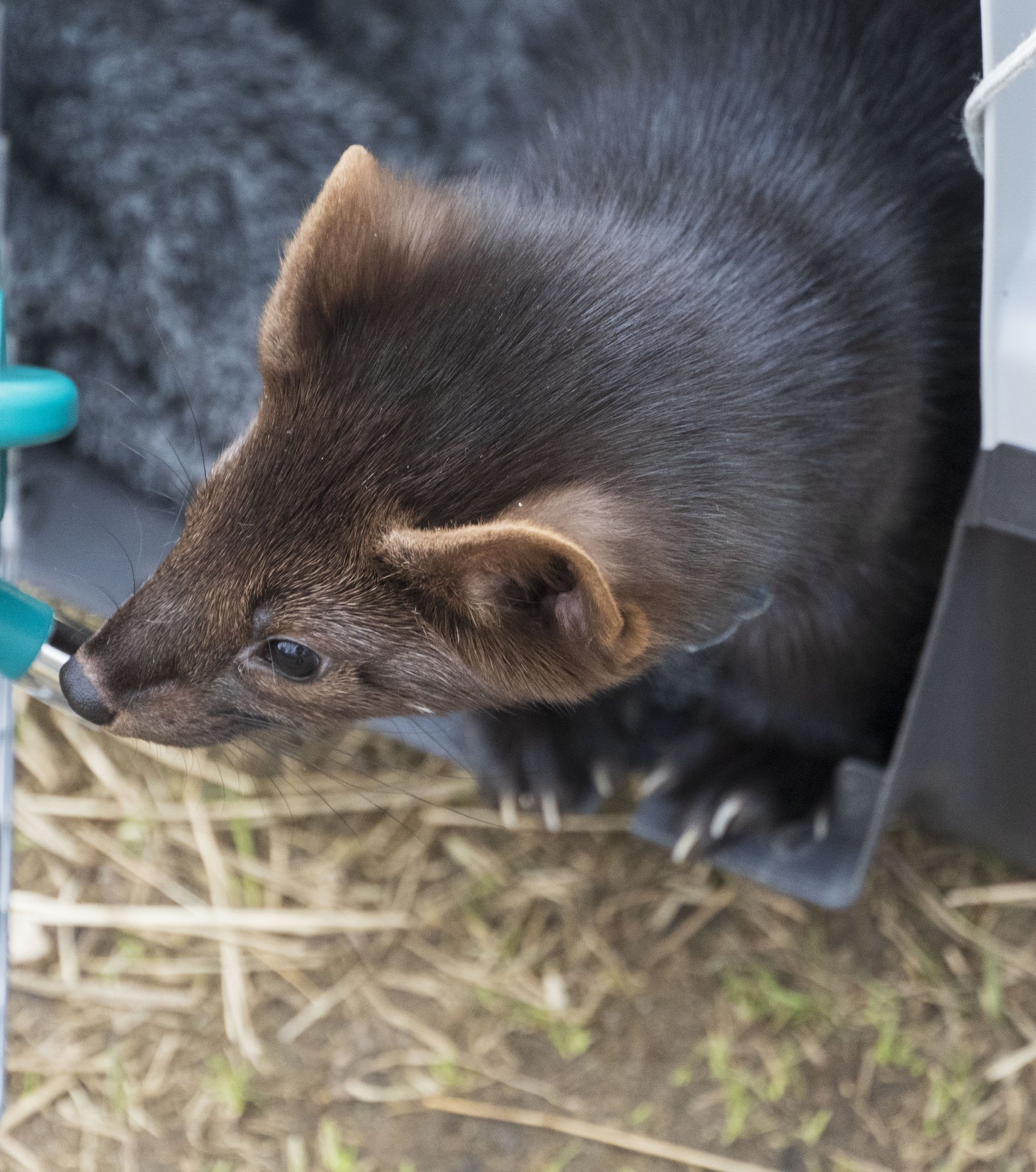
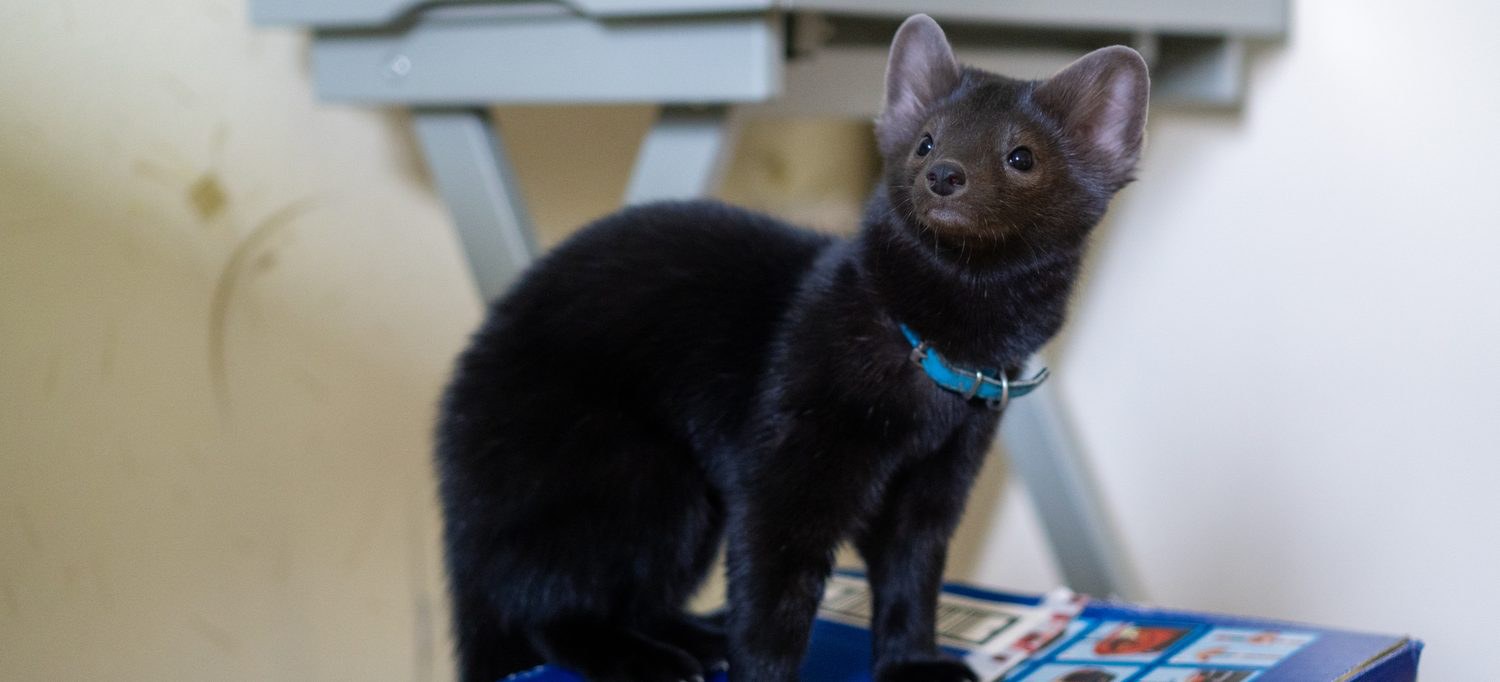
And so, for decades, people selected the calmer ones, the ones that did not panic in hands and did not fly into a sable hysteria at the sight of a human. Generation after generation. And one day they got this: the body of a wild predator, with the alarm system inside switched off. Not afraid of humans. Not afraid of dogs — in principle not afraid of anyone he ought to fear. The first predator in the taiga would now eat him in a minute, but on a fur farm he is unlikely to meet any predators. Buddy has kept his fear of birds, even small ones (although in nature sables eat them) — a parrot, a crow, an eagle, everything is scary… and that is about it: fear of humans, dogs and foxes is completely absent; we have not tested wolves, but it is not impossible that this little Napoleon is not afraid of them either.
For the forest, this is a death sentence.
Which brings us back to those who ask under every video to “set him free.” In eighty-seven there was such an experiment: several hundred farm-bred sables were released into the taiga, for real. Into the taiga that had been combed out of their heads for years. Most of those released could not survive; the forest did not accept them.
The free wild life was taken from him before he was born. Everything that remained went to us.
2.A Home for a Sable: Space
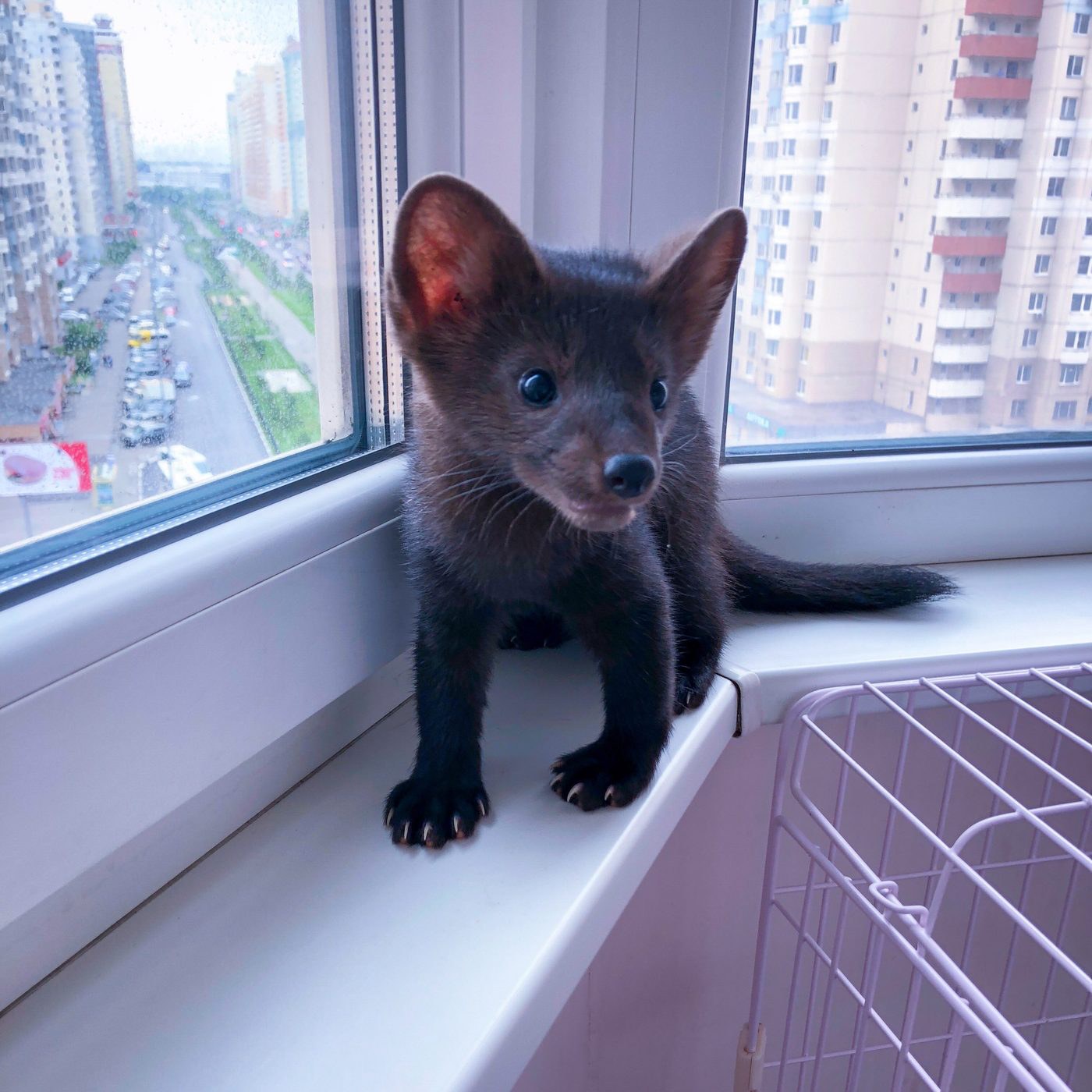
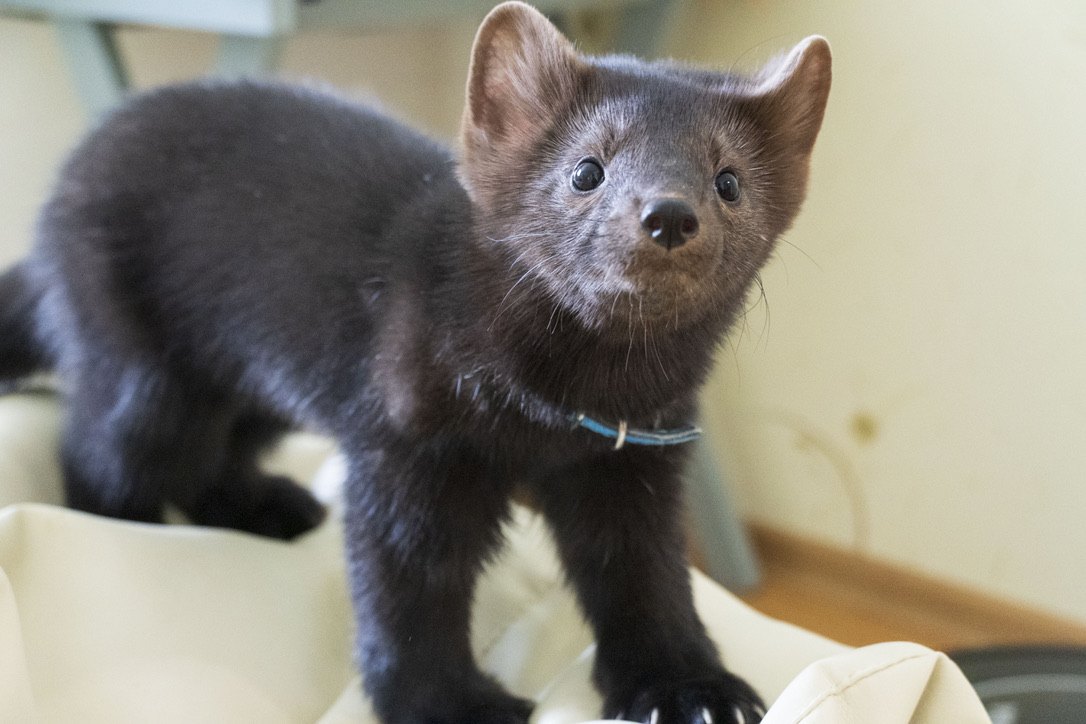
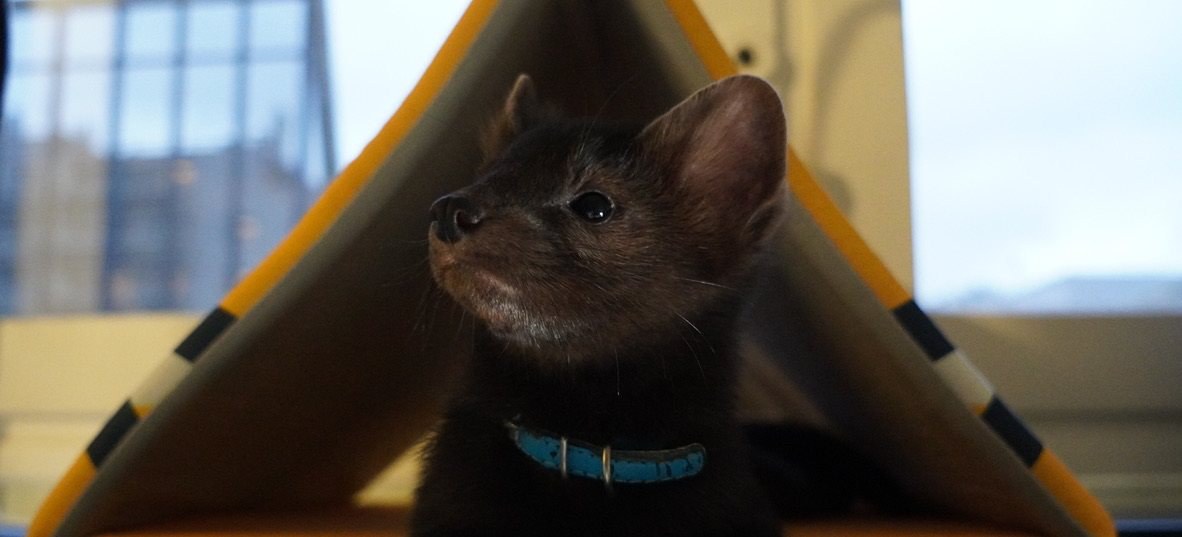
A tent house is territory too.
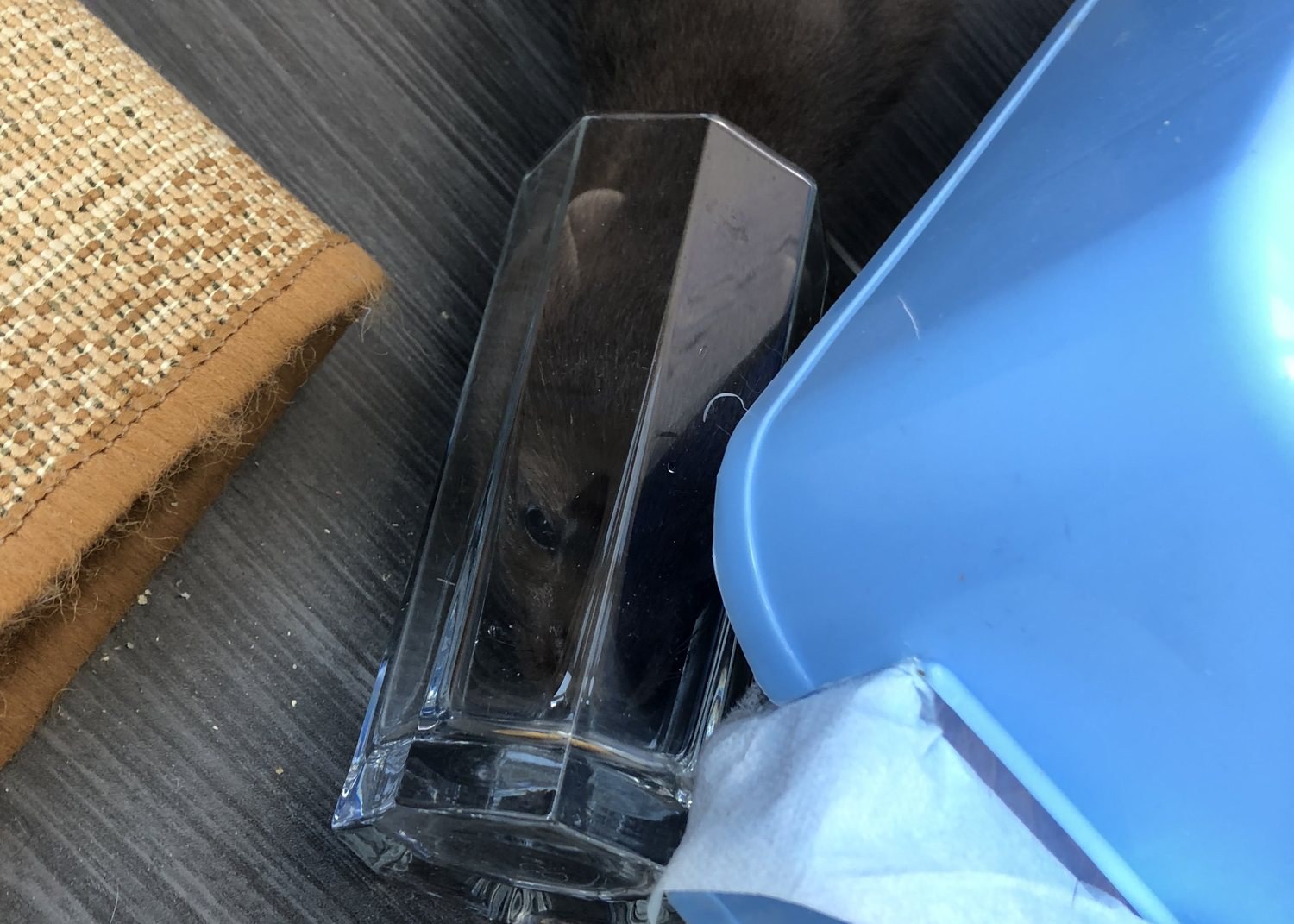
Now, about housing. The first thing to understand: a sable lives not in two-dimensional but in three-dimensional space, using all of its directions — up, down, horizontally and diagonally. Shelves, wardrobes, curtain rods, curtains, your head and the hole under the sink — all of this will become his territory. If you picture him in a one-metre-by-one-metre cage, forget about this animal and simply do not get one. He needs volume, height and routes to race along. And you will have to provide all that, unless you want a headache in the shape of a small furry terrorist who, out of boredom, will take your flat apart for spare parts and plot his route across your curtains, shelves and face. Possibly at four in the morning…
This is an escape artist of the highest category. A gap that fits his head lets the whole sable through — and his head fits almost everywhere. A window vent, the gap under a door, the hole behind the washing machine, the ventilation — for him these are all open doors. Those who keep ferrets roughly understand the scale; multiply it by speed, the ability to move along vertical surfaces, and a complete absence of the instinct of self-preservation.
What this means in practice. Either you build him a proper tall enclosure with shelves and shelters, or you give him a room or a flat and turn it into his territory. There is no middle option where he “just lives like a cat and sleeps in a basket.”
And yes, everything that stands in this flat now stands on his terms. Windows — a proper cat-proof net, no alternatives. Wires — chew-proof protective cable channels. Small things like porcelain figurines on shelves — put away… or glue down. Understand and accept: he is not thinking about how to harm you. He simply lives his life actively, noisily and in his own way, forever changing yours in the process — and, sorry, your orderliness does not figure in his picture of the world.
Now about temperature, and this is not pedantry for the sake of a checkbox — this is something a sable can die of. Remember: overheating him is far easier than overcooling him.
The logic is simple. This animal is dressed in the coat for which he was exterminated for centuries. The fur is designed for the Siberian winter, for minus forty and for wind that knocks a man off his feet. Now put this handsome fellow in a warm flat with the radiators on full blast and imagine how he feels. He cannot take his little coat off, even though he moults for summer. A temperature of 30+ is torture for him, and with age the animal will bear it worse and worse.
3.Temperature
The ideal for him is light coolness in the flat. If you feel hot in your flat, he is already suffering. Choose who in the house adapts to whom — and here is a hint: you are the one who adapts.

Ice packs for the carrier and the bag
Cool Coolers XL Ice Packs (4-pack)
4.Feeding
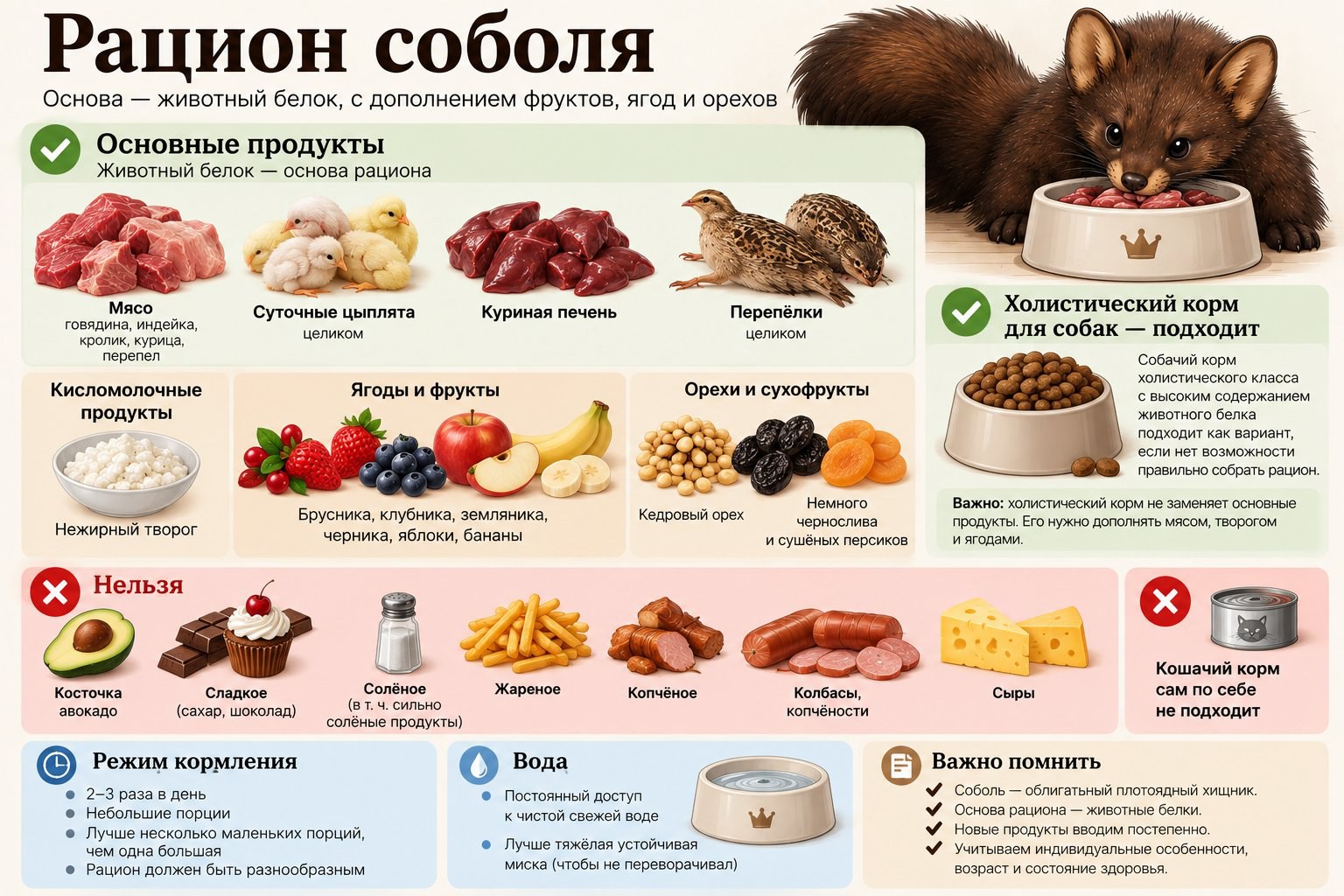
Now, feeding. A sable is a predator, and the starting point here is meat. Not food from the shelf “for decorative little animals,” not porridge, not whatever is left from your dinner. In nature he catches rodents and birds, raids nests, and in autumn switches to cedar nuts and berries — so you cannot call him a pure carnivore. But the foundation is animal protein.
The main rule that must not be ignored: food habits are formed in the first year. You have to accustom him to proper food from childhood. You have about a year to show the animal that food is raw meat, tvorog, berries and fruit. Miss that window — and retraining will be agonisingly hard. I know of cases where people received from someone else's hands an adult, sick sable that had eaten sausages and salami all its life and turned its nose up at raw meat, berries and fruit, simply because it had never been taught them. Feeding always hits the coat first, and then the animal's nervous system can start to suffer.
Separately, about cat food. On its own, it does not suit a sable. If you got a sable that is used to cat food, be sure to combine it with vegetables, fruit and berries, otherwise sooner or later you will meet the same problems with coat and nerves. If you have no time or opportunity to put together a proper diet for the animal, you can use holistic-class dog foods with a high animal-protein content. And supplement with meat, tvorog and berries. Teach this from childhood.
What you can and should give. Any meat. Day-old chicks — whole. Low-fat tvorog — an excellent source of protein; accustom him to it without fail, it will rescue you more than once later, especially when your little beast grows old. Chicken liver, quails — a most important thing, a wagonload of vitamins. Among berries and fruit: lingonberries, strawberries, wild strawberries, blueberries, apples, bananas, cedar nuts. Prunes — only a little; they cause gas and bloating. Dried peaches are fine too.
What is forbidden. An avocado pit is poison for a sable — do not give it. Sweet, salty, fried, smoked, your sausages and cheeses, chocolate — everything in the range from “useless” to “dangerous.”
And one moment that is easy to sleep through: it is better to assemble the diet once, together with an exotics vet. Deficiencies in a predator on a makeshift menu do not show up right away — but afterwards they are expensive.
6.The Three Pillars of Socialisation
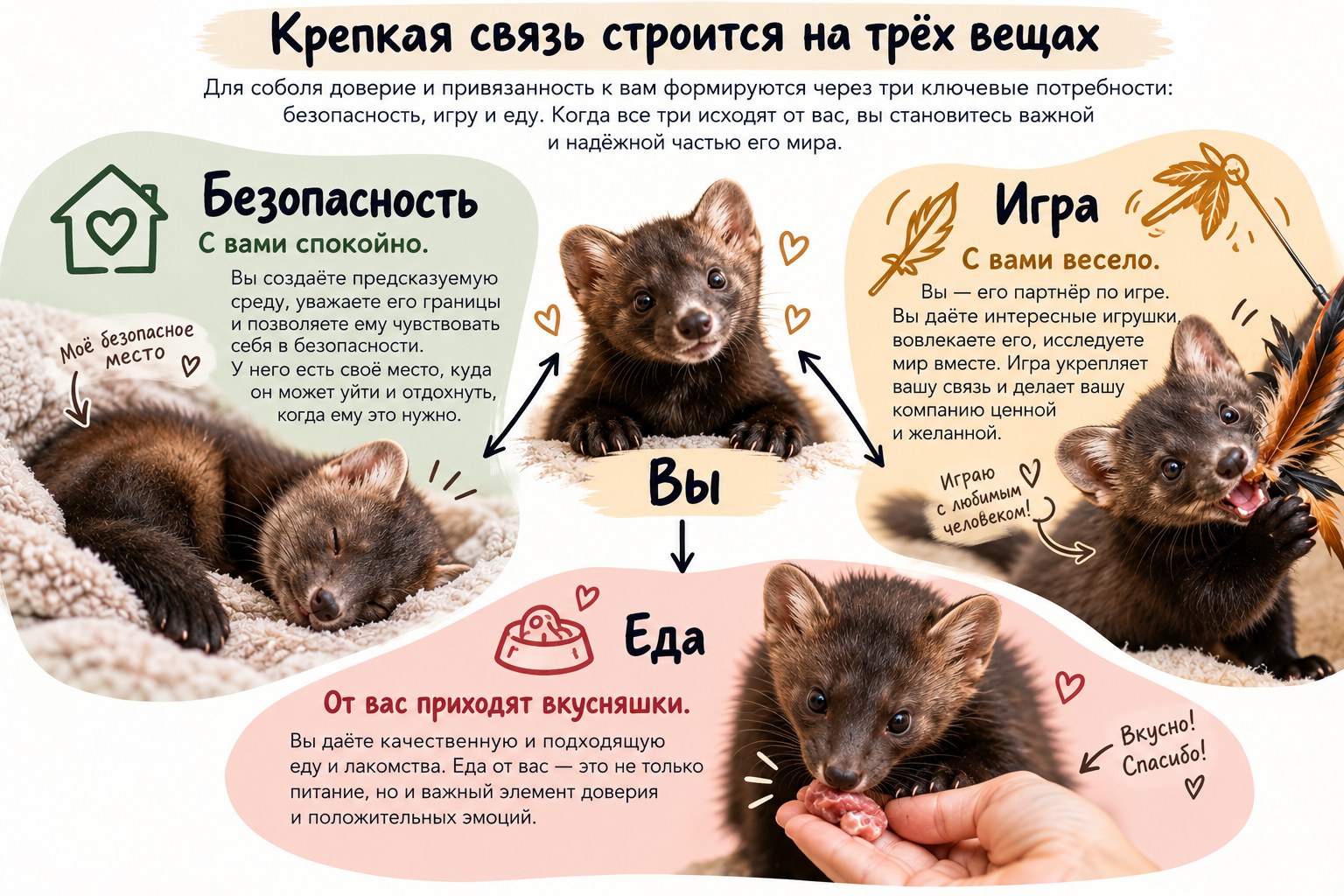
The socialisation of a sable stands on three pillars. These are safety, play and interest, and food.
All three motivational triggers must be tied to the human, to you — not to another animal. Then the sable begins to perceive you as the centre of his life, as the source of everything important, and most importantly — he learns from you.
The first pillar: safety. With you, it is not scary. You are not to be feared. You do not grab, you do not cause pain, you do not create chaos and unpredictability. Next to you, one can relax, lie down, close one's eyes, go about one's business. For a territorial solitary animal that has plenty of enemies in nature, this is the base. Without a sense of safety, no games or treats will work, because the animal will be thinking not about you, but about how to stay out of trouble.
The second pillar: play and interest. A sable is an incredibly active, curious and playful animal. It is not enough for him to simply be fed and not mistreated. He needs life with you to be interesting. You need to become his play partner, the one he plays with — not just the human who brings the bowl. Play for a sable is a huge part of the relationship. Through play he lets off steam, learns, tests boundaries and bonds. If you do not play with him, someone or something else will take that place in his life. Do not delegate this to your dog, your cat or another sable. This can become a fatal mistake that will cost you a great deal of nerves and effort later, when the animal grows up.
The third pillar: food. Tasty things come from you. You are the one who feeds, treats, brings something new and pleasant. This is the simplest and most obvious motivator, but it only works together with the first two. Food without safety turns into bribery; food without play turns into a feeding trough. And all three together produce a normal, living attachment.
Everything tasty — only from your hands.
All three pillars must be tied specifically to the human. If the sable gets food from a bowl that stands by itself, finds play in the curtains and wires, and feels safety only in the far corner under the sofa, then you are superfluous in this system. He will live next to you, but not with you.
Your task in the first months is simple in meaning and not simple in execution: to become for the sable the source of safety, play and tasty things at the same time. On this attachment, rules and boundaries are built later.
7.How a Sable Learns: Predictability and Consequences
A sable learns constantly. Not only when you deliberately teach him something. He watches you, memorises reactions, and very quickly figures out which of his behaviours produces a result.
A sable does not understand the words “no,” “bad” and “that's not done.” He understands consequences. He remembers what happened after his action, and draws a conclusion. If the result is pleasant, he will repeat it. If the result is unpleasant, or nothing happens, interest fades.
The most dangerous connection an owner can accidentally form looks like this:
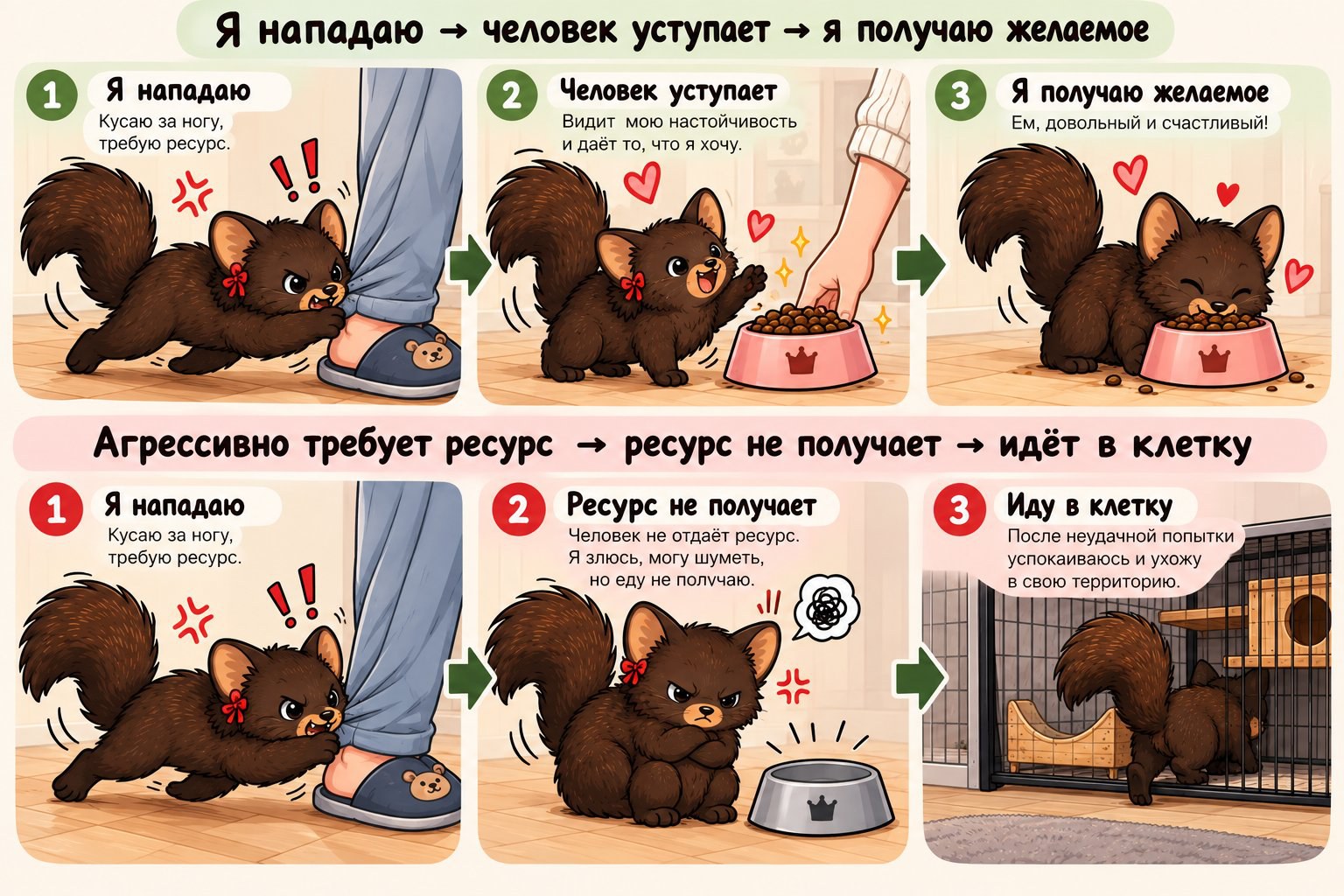
“I attack → the human yields → I get what I want.”
Let us take food as an example. The sable wants what you are eating or holding in your hands. He begins to advance, to grumble, to try you with his teeth, sometimes lunges. The owner instinctively retreats, pulls the hand away, gives up the piece or simply steps back. For the sable this is a clean victory. He did not just get food. He got confirmation that his aggression works.
And this repeats. Next time he will press harder, because last time it worked. He will simply do what produces a result. Exactly as he would do with a fellow sable on his territory.
That is why such a connection must never appear at all. Because even a single time, for a sable, often means “well, it worked once, didn't it? worth trying again.”
But there is a second side. A sable learns from the good just as well. If calm behaviour brings play, attention, a treat, he remembers that too. And from then on he begins to choose the strategies that bring more benefit. Your task is to make calm interaction the profitable one.
The same behaviour must lead to the same result. Always. Not one way today and another tomorrow. Not depending on your mood, your tiredness or how your day went.
If today you got scared at a bite and gave food, tomorrow pretended nothing happened, and the day after restricted space for the very same thing — for the animal this is not a system, it is a lottery. He will test again and again, because he does not understand what rules he lives by.
Now imagine that you live with a creature that constantly tests boundaries because it never knows where they are. It is exhausting. For you, and for him.
For a sable, the system must be absolutely clear. He must learn a few simple connections, and they must work always.
Got overexcited, started biting you hard and wound himself up? You gave a warning signal and ended the game. And so it goes, always.
Desired behaviour is reinforced with play or food. For undesired behaviour, games end — and in the extreme case, space is temporarily restricted too. No goodies for bad behaviour.
Aggressive behaviour, when the sable seriously attacks and assaults, means he goes to a place where he is bored and has nothing to do. On Buddy's balcony there was a “penalty cage.” That is where the animal went when he tested boundaries and tried to attack. There he sat until he calmed down. Once calm, the cage opened, and the animal went about his business on his balcony.
Predictability is your everything. Attacked? Calmly pick him up and put him in the cage. Calmed down — out he comes. Got carried away, started biting seriously — the game stops. Tries to aggressively wrest your food away, attacks — does not get the food and goes to the cage. Calms down, returns to the balcony, gets the food.
Separately, about the first five months. This is not the hardest period. It is the window when the base is laid. It is the base that will help you get through the hard periods of hormonal maturing. Up to five months he is a child. That is when he tests everything: hands, boundaries, your reaction, your steadiness. It is in this window that you must “explain” the rules to him, because for him you are “mum” or “the adult partner.”
8.The Right Connections
And now, concretely, what to do.
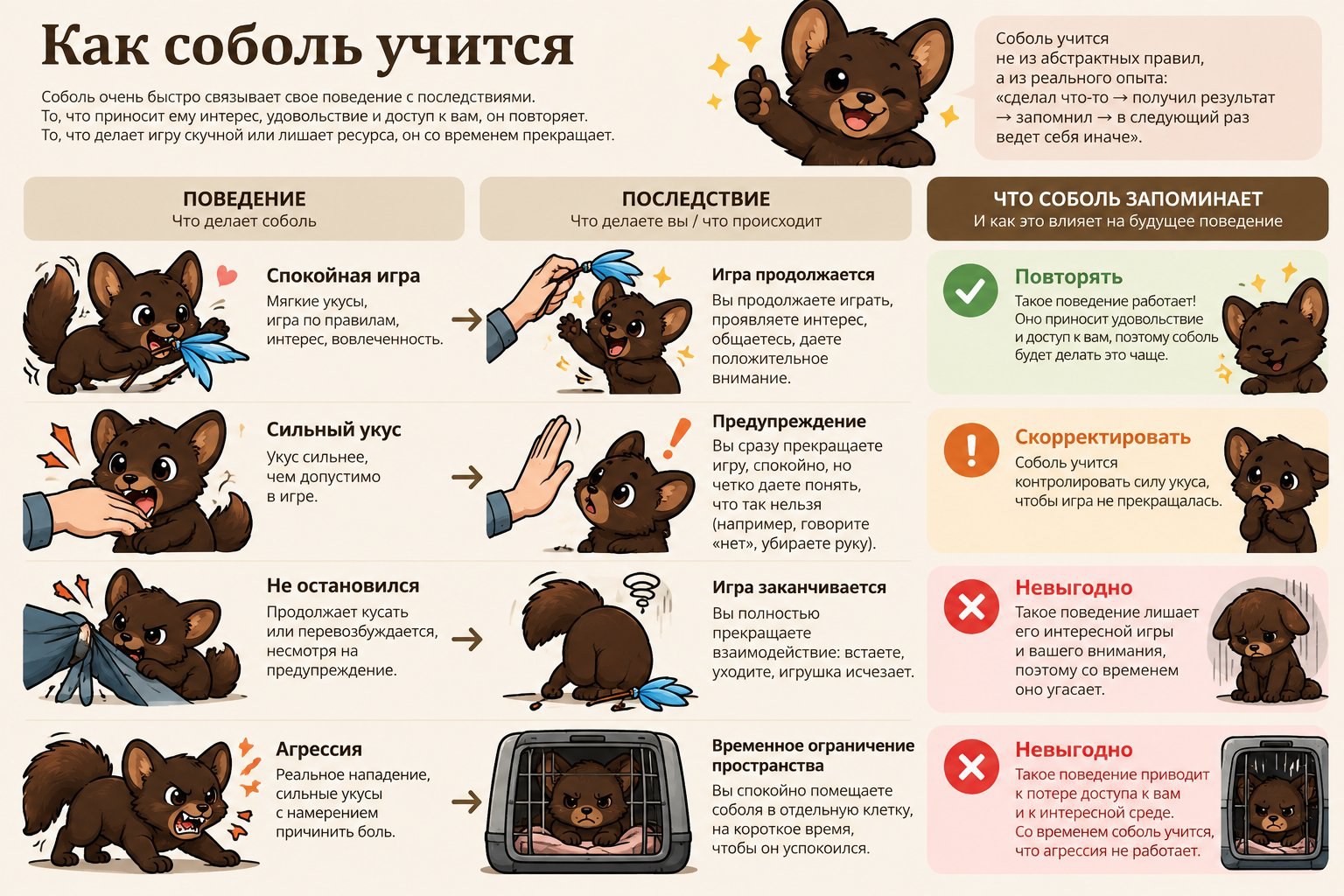
1. Calm play → play continues. The sable plays but does not get overexcited, does not bite too hard. You notice this. Praise with your voice, reinforce with play, attention, a treat. A sable learns to distinguish intonations beautifully. This will come in handy later.
2. Too hard a play bite → a warning signal. For us it was a strict: “Ah-ah-ah, Buddy!” In time he understood perfectly what this sound meant. Even if he had simply got too carried away in play, after the signal he immediately looked at me and corrected his behaviour.
3. Did not respond to the signal → the game is over. You simply get up, remove your hands, stop the interaction. Without shouting. A sable does not understand lectures. He understands only that he bites harder and the fun ends.
4. Aggressively demands a resource → does not get the resource. Tries to wrest food away, attacks — does not get the food and goes to the cage.
5. A serious attack → the interaction ends and space is temporarily restricted.
The main thing to understand about the right connections: this is not punishment. It is about the animal learning to distinguish which of his behaviours brings him benefit and which deprives him of benefit. A sable reads this very quickly, if the rules are unchanging. And then he himself begins to choose calm behaviour, because it is more profitable.
9.When It Is No Longer a Game: Temporary Space Restriction
A serious bite. An attack. An attempt to drive you away from a resource or to take food from you. This is no longer a game and not overexcitement. This is aggression, and a different logic works here.
In such cases I recommend using temporary space restriction.
The main rule: the place of restriction and the sable's home must never be one and the same place.
If the sable lives on a balcony, in an enclosure or in a separate room, that is his safe territory. That is his home. He must feel good and calm there. Do not turn his home into a punishment. Otherwise you will destroy the very sense of safety you spent all the previous months building.
For temporary space restriction it is better to have a separate small cage; in our home it was called simply the “penalty cage.” That is where the animal went when he tested boundaries and tried to attack. There he sat until he calmed down. Once calm, the cage opened, and the animal went about his business on his balcony.
I recommend not using the carrier for this on a permanent basis. You will still need it for trips and the vet, and it is better not to create a stable negative association with it.
The point here is not the infliction of pain. For such an active animal, the restriction of space, the absence of exploration and entertainment is in itself a serious punishment.
The procedure is simple. Attacked? Calmly put him in the separate cage. The interaction is over. Wait for stable calm behaviour. Release him onto his territory.
Do not release him the very second he stops growling. Wait for stable calm behaviour: he has stopped rushing about, lies quietly, no longer displays aggression. Only then can he be let back home, to the balcony or the enclosure.
Calm behaviour can be rewarded with a treat.
After a serious episode of aggression, I recommend not returning to joint play on the same day. He calmed down, went back home and carries on with his sable business. But the interesting interaction with you is over for today.
Buddy's story. We even had such a case. Once I was taking off his collar, which he strongly dislikes, and he bit me quite seriously. And then he stepped away, went to his “penalty cage” on his own, and lay down. I did not even have time to do anything. He already knew the sequence of events so well that he carried it out himself. At that moment I did not even want to punish him: it was obvious that he understood perfectly what was about to happen. But a rule is a rule. He sat a little, calmed down, I opened the cage, and he went about his business.
It can come even to this, if you are consistent always. The sable himself begins to understand the consequences and sometimes even gets ahead of you. But this does not cancel the procedure. If there is a rule, it works always.
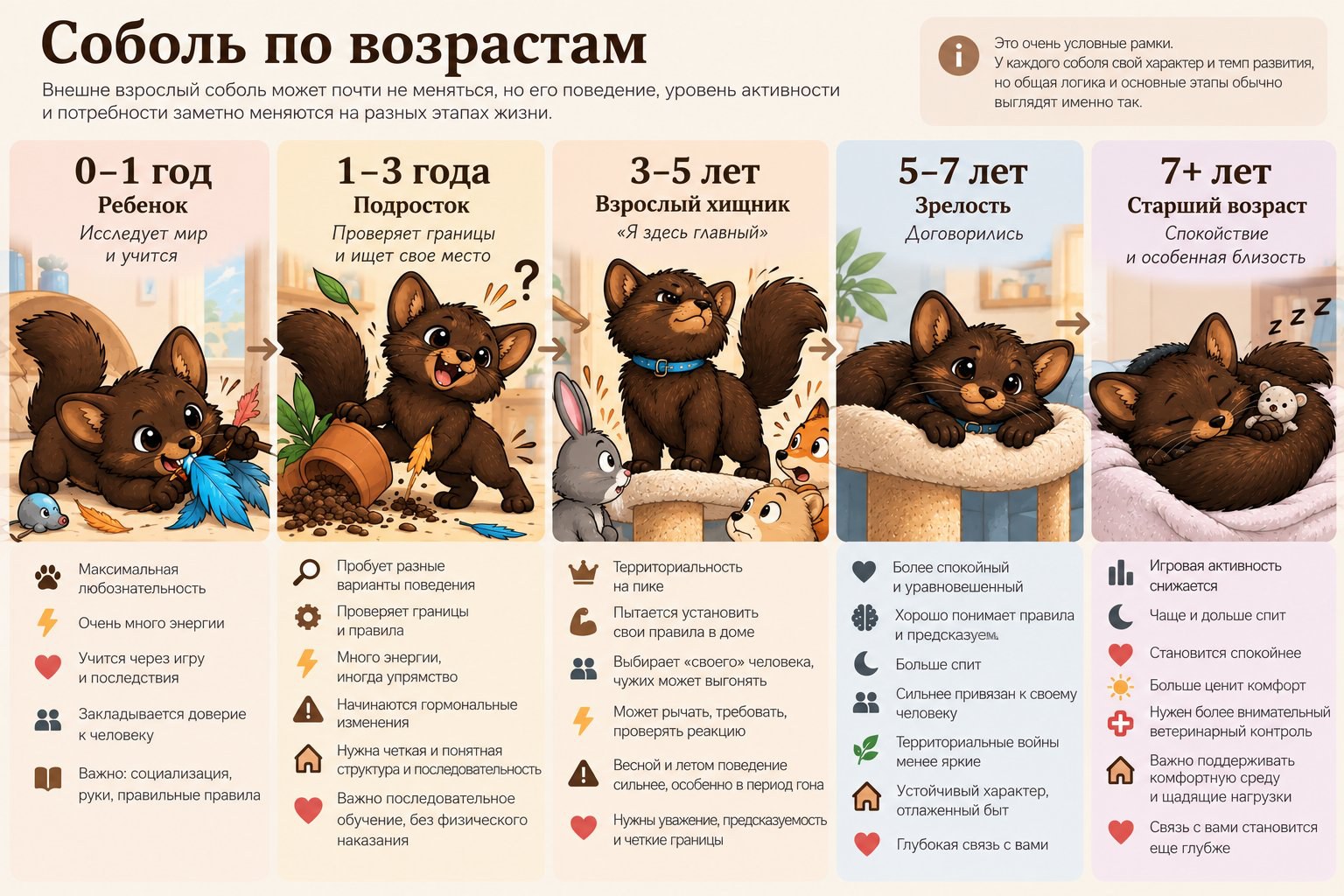
11.A Sable by Age: 0–1 Year, the Child
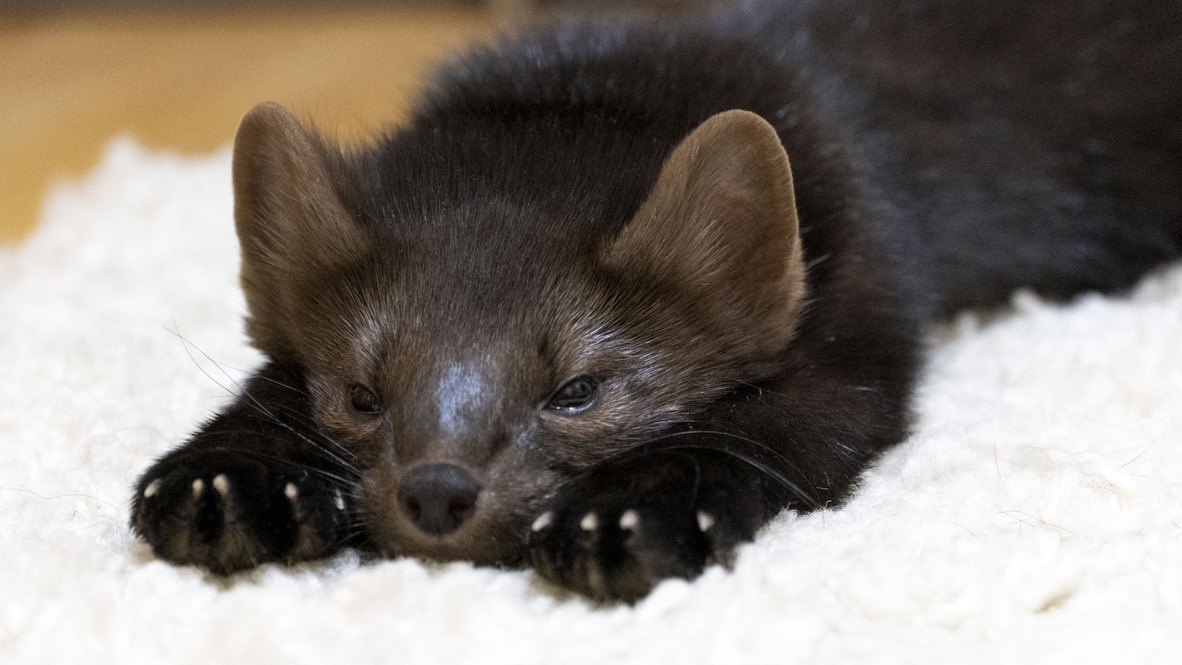
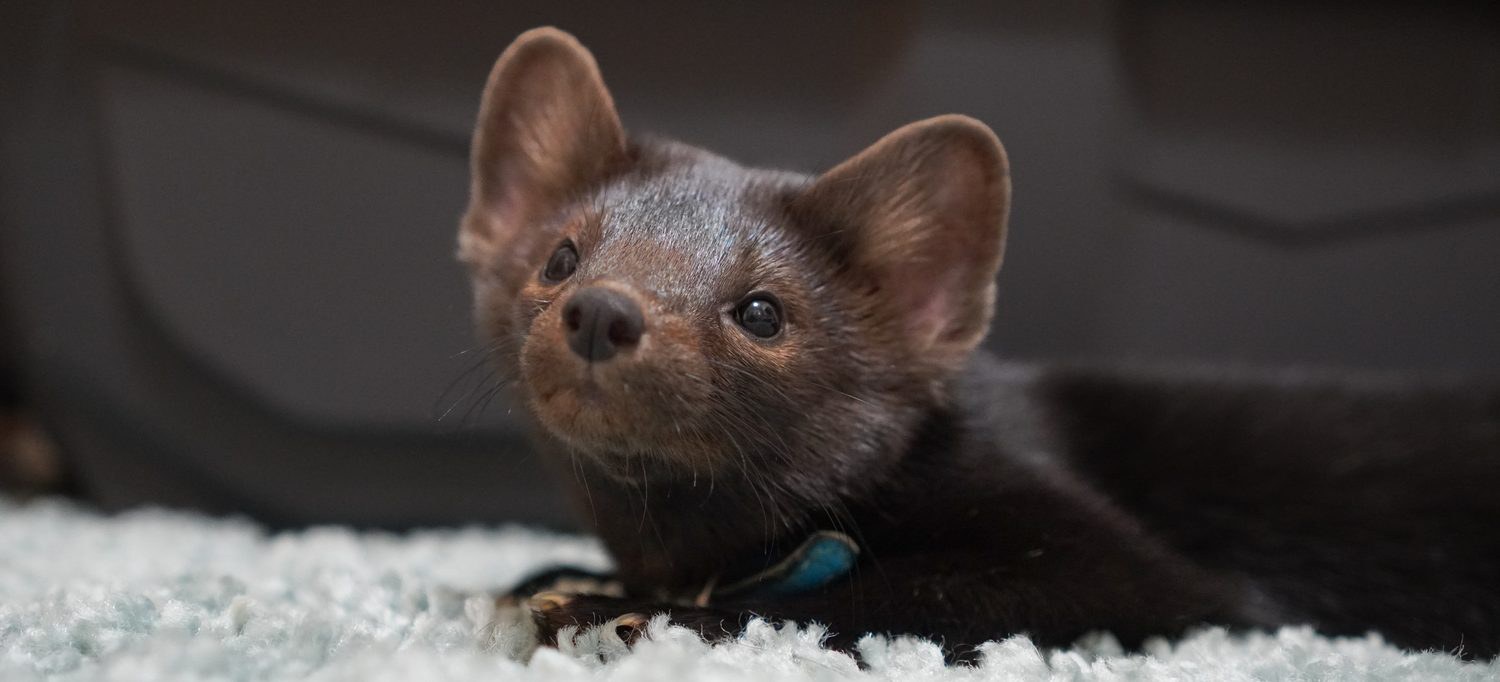
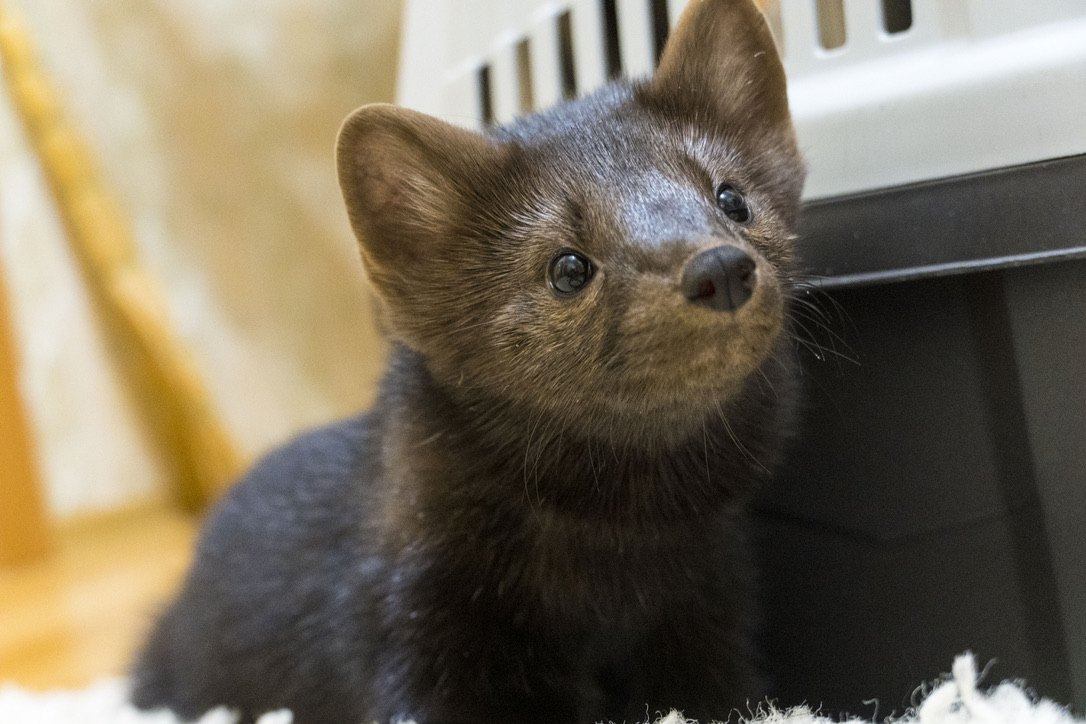
The same Buddy in different years.
The first year is a child, and he behaves exactly like a child. He races about, climbs into everything, drags whatever he finds into his mouth, plays nonstop and switches in a second: a moment ago he was growling at you over a confiscated toy — and now he is bouncing and calling you to play again. There is no real malice in him at this age. To get huffy, to grumble, to stalk off proudly to his corner — yes. For real — no.
You should not be deceived by this ease, because your whole future sable is being laid down right now. This is the very window when everything is decided: whether he will get used to hands or not, whether he will eat normal food or turn his nose up all his life, whether he will accept you as his own or remain a bit wild.
So for this year you have exactly two tasks, and both are more important than they seem. The first is socialisation: hands, trust, calm contact — what we talked about in the chapter on the first months. The second is proper food habits, which are hard to change later.
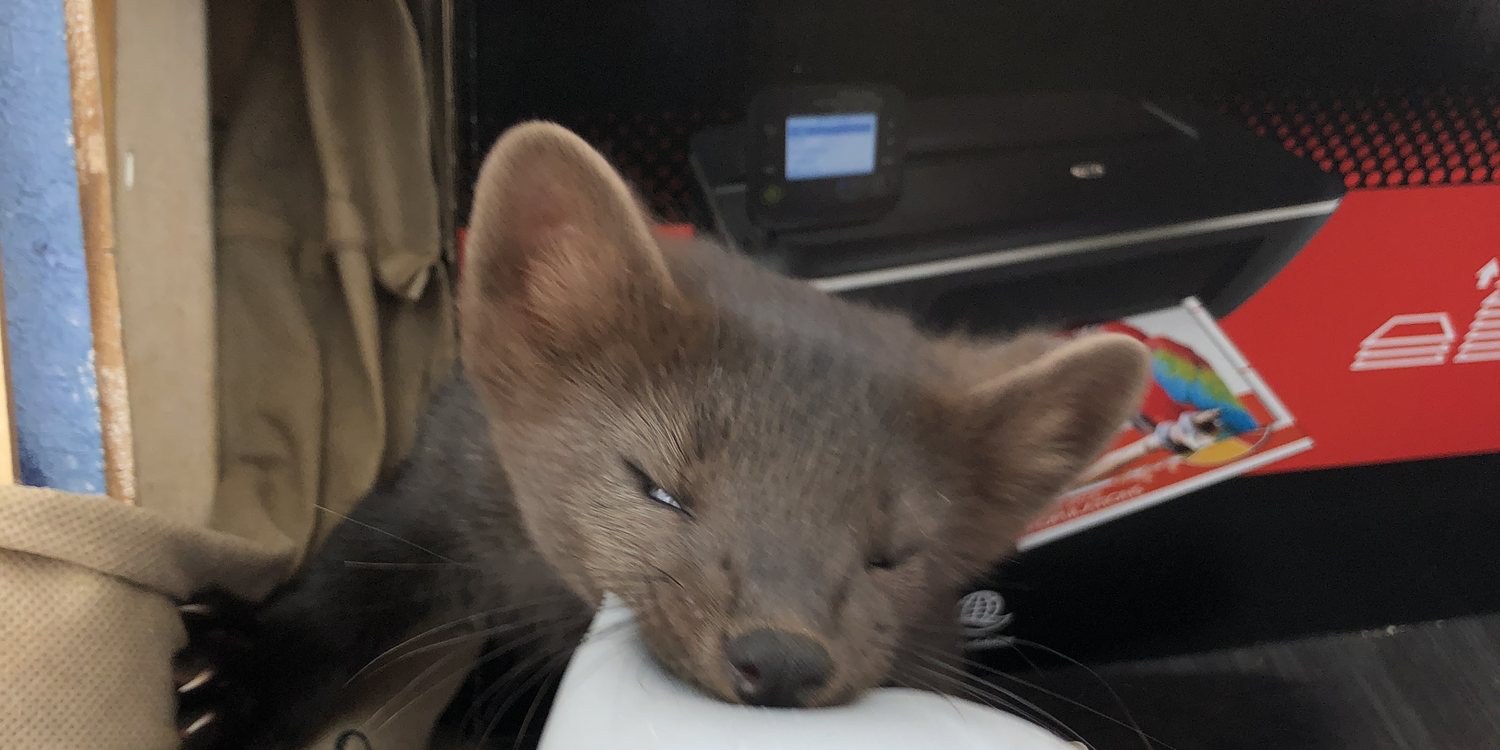
And do not be frightened if the baby marks you — that is, simply wets you from head to toe. A pup marks its mum, and you are now his mum. This is not an outrage, it is pure love, sable-style, strongest precisely at this age. More about marking in a separate chapter.
The cute little hooligan in front of you is a rough draft. You are writing the final copy right now.
Buddy's story. Here is what this first year gives you, in a concrete example. In childhood — specifically starting from about six months (we missed the first half of childhood, because Buddy was supposed to adapt to life in the wild, but he failed the exam, and by six months it became clear that he would live among people). We taught Buddy to take treats and give a paw. At first he simply ate while I held his little paw in my hand. Then, for the same treat, I began clicking the nail clippers, and only later, when he understood it was not scary, did I begin to trim those little claws. Today I trim Buddy's claws calmly, without drama, because for him…
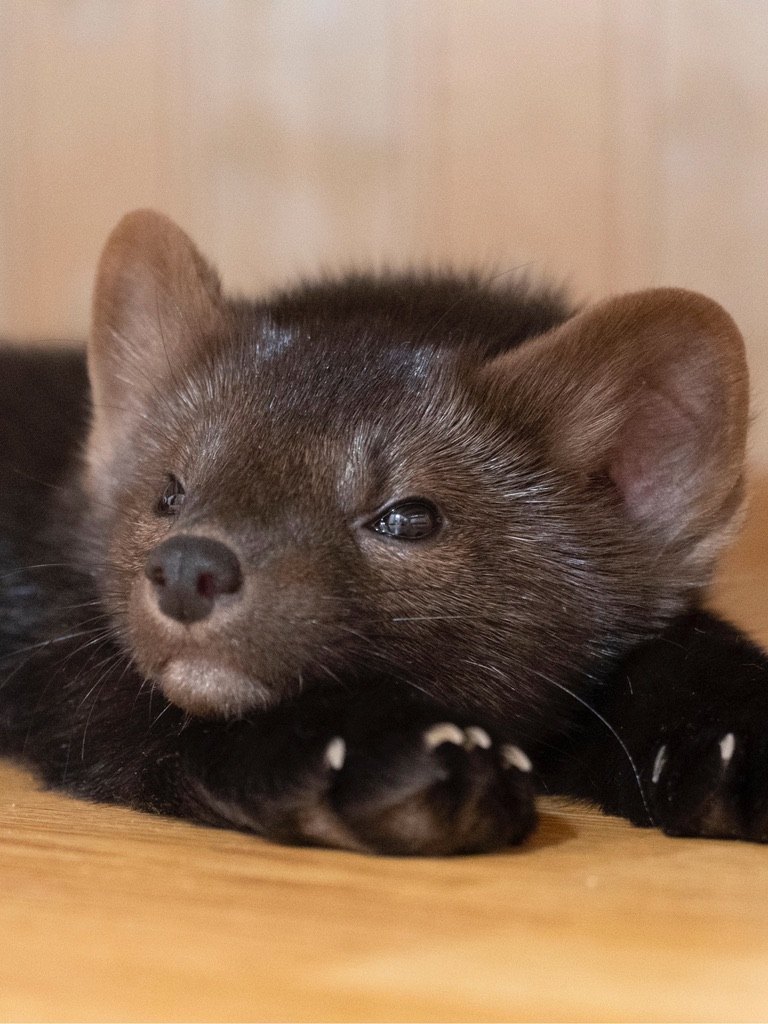
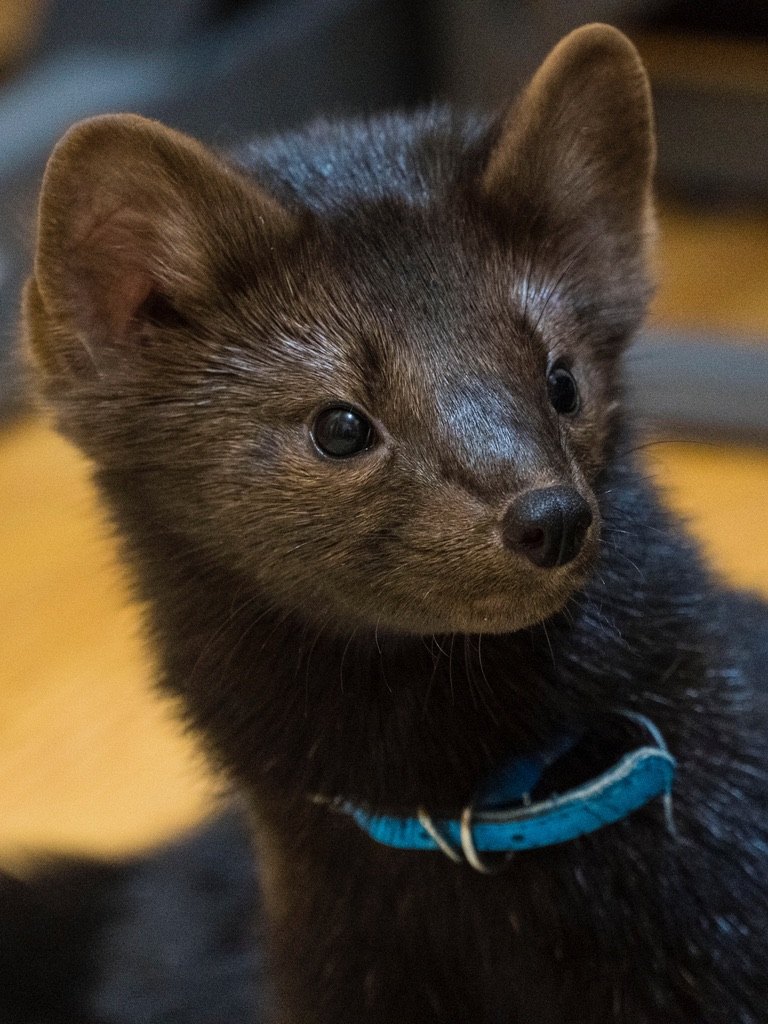
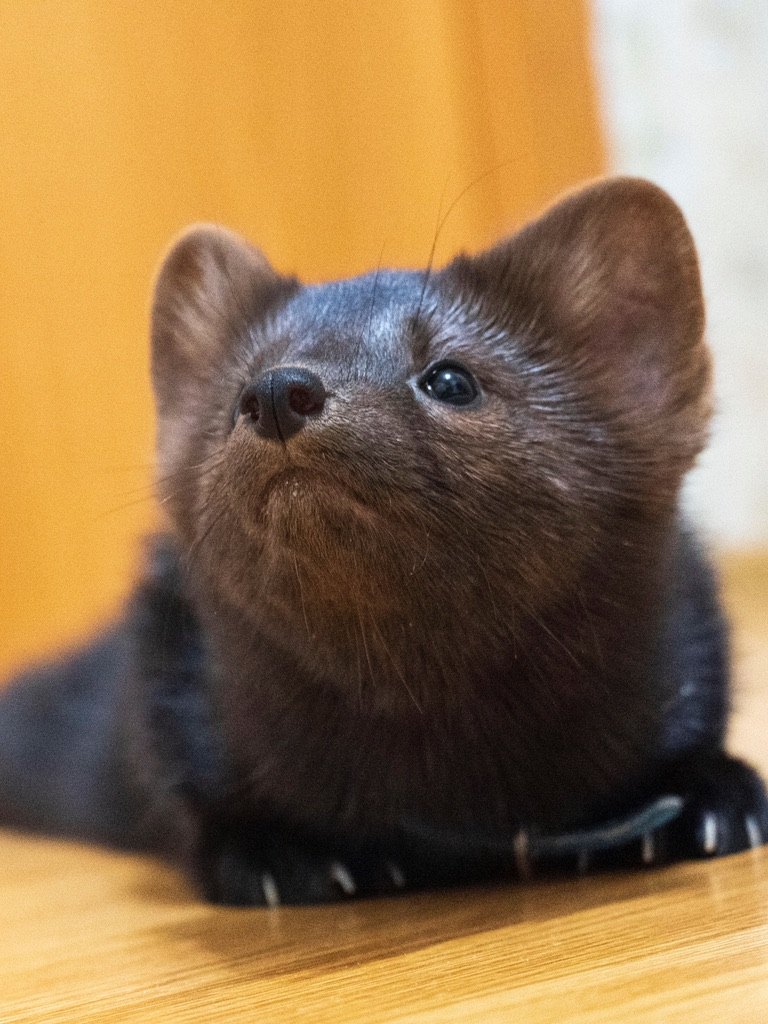
12.1–3 Years: The Teenager
The child is over; the teenager has begun, with everything you know about teenagers. The animal is growing up and the first thing he does is go test the boundaries: what happens if I do this? and what if I do it like this? A character that seemingly never existed suddenly comes out, and it turns out the animal has an opinion — and it does not always coincide with yours.
At the same time, the hormonal background kicks in. First waves, first changes in behaviour, first “what is wrong with him.” The question of castration itself is decided earlier, before one year — about that in the veterinary chapter. But even a castrated animal will still get his share of hormones, just later and more gently. And this is where you catch it.
And about marking. Remember how we learned that a sable pup marks its mum? Well, somewhere around one year he will mark mum less. But the entrance to his room, food, stash places — those he will start marking at full force. Details in the chapter on marking.
Important, and this is not negotiable. A sable must never be hit or hurt. Never. Not in this nasty, obnoxious age, not in childhood, not later. And here is why it is critical right now.
If you raise a hand against the animal, he learns one single thing: you can attack and hurt him badly. And then his own nature switches on. For a sable, aggression means one thing — he is being driven off the territory. That is exactly how a mother sable, with fights, expels her grown-up pups into adult life, out of her home. The separation of children from the mother in sables happens with battles and brawls. And when real maturing arrives at three years, a beaten animal reads your past aggression exactly like this: I am being driven out. Only he has nowhere to go — he is locked on one territory with you. So one thing remains — to drive you out…
A teenager is not yet the final animal. He is the one who is deciding right now who to be beside you. Get through this stage with patience — and at three you will have an animal that trusts you. Keep lashing out — and at three you will get a very different one.
13.3–5 Years: The Adult Predator
Here it is, the main stage. The one for which, to be honest, this whole guide was worth starting. Because this is exactly where most unprepared owners break.
By three years, for some by four, that second maturing arrives. The sweet animal you knew departs, and in his place an adult predator moves in. Consider that you have been delivered a new sable, even though you rather liked the old one and were not planning to exchange him. He has grown up and now he makes everyone regret it. You did not open the cupboard he wanted — he growled at you for it and proudly retired to his place, offended in his best feelings.
What changes in essence. He chooses one person, his own, and looks at the rest so-so. You will no longer let him out to guests, because this little shaggy ruler of your flat may unexpectedly decide to end your party by biting everyone present. With Buddy it is a matter of taste: he loves girls and does not touch them, while men he expels by default. Yours will have his own preferences, but the essence is one: strangers are no longer welcome in his house.
From spring to summer, several waves of rut rise in him, and it is not only about females and testes. In spring the redistribution of territories begins: in nature the males liven up, chase off neighbours to grab a better plot, and then get down to chasing females. The females also become nervous, because they start getting seriously pestered. Then the rut itself, somewhere from July to the end of August. Your animal will change in waves: a couple of days fine, then one day — a Tasmanian devil. At night he does not sleep, races over every surface. And if he has little space, this can turn into stereotypic behaviour, when the animal, from tightness and stress, mindlessly repeats the same movements. That is why a wheel is a must for him: it lets him drain that irrepressible hormonal energy. In short, all summer the animal is nervous, twitchy and obnoxious. The Suprelorin implant softens this but does not cancel it: even with it he will misbehave, just more mildly. More about the implant in the veterinary chapter.
And now the most important thing, and listen carefully. This covers everyone. Not “some have it easier,” not “but it passed me by.” With some the sable is a bit quieter, with others a bit louder, but absolutely everyone goes through this. People wrote to me in tears: “I don't know what to do, where did I go wrong, he became completely different.” So here it is. You went wrong nowhere. Now-here. You did everything right. That is simply how the animal is built. He is supposed to become an adult predator by three, and he becomes one, whether you raised him well or badly.
What to do about it. Fighting is useless; your task is to give an outlet. A big enclosure where he is the absolute master, his own territory where he can go and reign. A wheel, as I said, is not a luxury either. There is a separate chapter about territory; I lay it all out there.
And one more thing, without which nothing else works. Do not show him fear. The adult animal will go test your boundaries again — this is the second wave of that same separation: he is a territorial loner, and tolerating a rival on his plot is hard for him, even if that rival is you. Got scared, retreated, started fussing — he reads this as a victory: that's it, he has grown up, he is in charge here, the territory is almost retaken on his terms. Hitting and punishing is still forbidden; we have already analysed why. There is one working tool: calmly isolate. Started pressing and pumping up aggression — you simply send him to his room or enclosure, period. Every time. He must learn two things. First — aggression does not move the boundary and simply ends the fun. Second — his territory is his enclosure; everything else is not his territory, he is not the boss there. This is important. As I wrote earlier, he is a territorial loner. To avoid arriving at a situation where he drives away your guests and then you from your own kitchen, let him understand that his territory is the enclosure. And the rest of your home is a place where you coexist together, because he is not the boss there after all.
And here is how I live it. Buddy, in all these years, has never once bitten me, although he went through every hell of his own. The secret is simple: I always place the implant, he has his own territory where he is king, and if I see the animal is out of sorts, I simply leave. I do not pester, do not educate, do not argue. I respect his “get lost today” — and everyone stays alive.
Buddy's story. I will tell you honestly how it was with me. At first, in answer to his growling, I tried to growl at him — hoping to show that I am a scary beast here too and can growl, by the way — but it came out so-so. And it looked, I think, even worse. And then it dawned on me that the best weapon in my hands was an ordinary spray bottle with a directed jet. Growled at me — got a jet in the nose. And so on, until he went back to his room. No pain, no drama; the animal is simply uncomfortable and understands: this number does not work with me. Since then our dialogue has been far more constructive.
Three to five years is the age when your sable finally becomes himself. Not a breakdown and not a punishment for you. Hard — yes. But if you are ready to yield him territory and not take his character personally, you will get through this together. And afterwards it will get easier, honest word.
14.5–7 Years: Maturity
Exhale. If you have lived to this age and have not wrecked everything, from here on it will get noticeably easier.
By five to seven years, the sable's character has finally taken shape. That same adult predator who turned your life upside down at three has not gone anywhere, but the peak is behind. The hormonal storms are no longer so deafening, the battles for territory not so furious. You have settled into a balance: you have once again learned to understand this animal, and he has understood that he will not get rid of you, and has accepted it as a given.
And here is what matters: it gets easier on both sides at once. Over these years you have finally learned your sable: where his boundaries are, when not to pester him, what this look of his means and this sound. And he has learned the rules of your home: how far he may go, where his territory is, and what kind of impudence earns a jet in the nose. You have stopped fighting and started living together. Two predators have come to an agreement.
This does not mean he has become silky. Summer is still summer, the implant is still needed, the character is still present. But now it is predictable. You no longer clutch your heart at every change, because you know: this will pass, this is the season, this is simply him.
15.7+ Years: The Senior Age
And here it is — the thing the whole journey was worth taking for. The age at which the sable finally becomes the animal you dreamed of when you brought that little hooligan into your home.
There is less energy. He sleeps more, races about less; we play more rarely now, without the former crazy acrobatics — all this, of course, with a wheel available. Fewer conflicts. That same “I am an adult strong predator and I am in charge here” gradually leaves him; there is no one and no need to prove anything to anymore. The territory is divided, the rules are clear, the war ended long ago.
And something appears that was not there in his riotous youth — he begins to lean on you. In the literal sense. Young Badya would have found a way to climb higher himself, but at eight there is no shame in asking. He comes up to me, signals: come here, will you. That is so he can use me, the dry-nosed vertical, to jump onto the wardrobe. And he will go hide a treat along the ropes under the ceiling only if I am nearby, because he knows: if he falls — I will catch him.
And sometimes this support is not for the body but for the soul — and not only yours for him, but his for you. I will tell you one story. Once I was crying, I no longer remember why. And Buddy somehow understood that I felt bad. And he brought me his dried-up treasure — a dry, stinky fish skin. Mind you, this was the least valuable thing in all his storehouses; he does not eat such stuff himself but hides it for a rainy day — what if hungry times come and I will eat this muck — but the gesture itself! He laid it beside me and watched: well, feeling better? Look, there is food, here are the supplies. I burst out laughing at such care. That is what a senior sable is.
I will not deceive you: you will not be petting this little hairy grown-up fellow. He will not curl up at your side like a cat. But you will have a friendship — complicated, varied, like nothing else, and completely real.
That is what it was all started for. For the animal who chose you, lived a whole life beside you, and in his old age comes simply to be together. Eight years of road, each with his own character — that is not simple, but it is worth it.
16.Behaviour: Why He Does That
We have walked the age arc. Now a short reference on the habits that will stay with him all his life, at any age. We go by the principle of “why.”
Why he bites. A sable lives with his mouth: he plays, explores, communicates. A bite is more often not about anger but about play and curiosity. The problem is that his teeth are real, and in excitement he does not measure his strength. You cannot wean him off biting completely; you can mark the boundary: overdid it — the game is over, attention is gone.
Everything new is checked with the nose first.
Why he growls. It is his “get lost.” Displeased, refused something, pestered at the wrong time — a growl. This is normal language, not aggression in itself. Hear a growl — give the animal space, do not lean in to prove your point. In general, a growl is always a warning. A sable attacks silently and sharply.
Why he screams. Most often — from tightness. Locked in a small cage with nowhere to retreat to; you approach, and he has nowhere to run — he will scream and drive you off. Even a tiny one. This is instinct: a small space plus the approach of another creature equals a threat. In a big enclosure, where there is somewhere to retreat, he will not scream. Screaming is for intimidating the opponent: here I am, scary and strong, do not come near, look how well I can scream. It can also be “calling mum,” but that only happens in childhood.
Why he gnaws everything. Because he can and because it is interesting. Wires, furniture, your things — for him all of this is material for research. And how does he research? Correct — with his teeth. The conclusion is one: either a room with nothing dangerous in it, or free time strictly under your supervision.
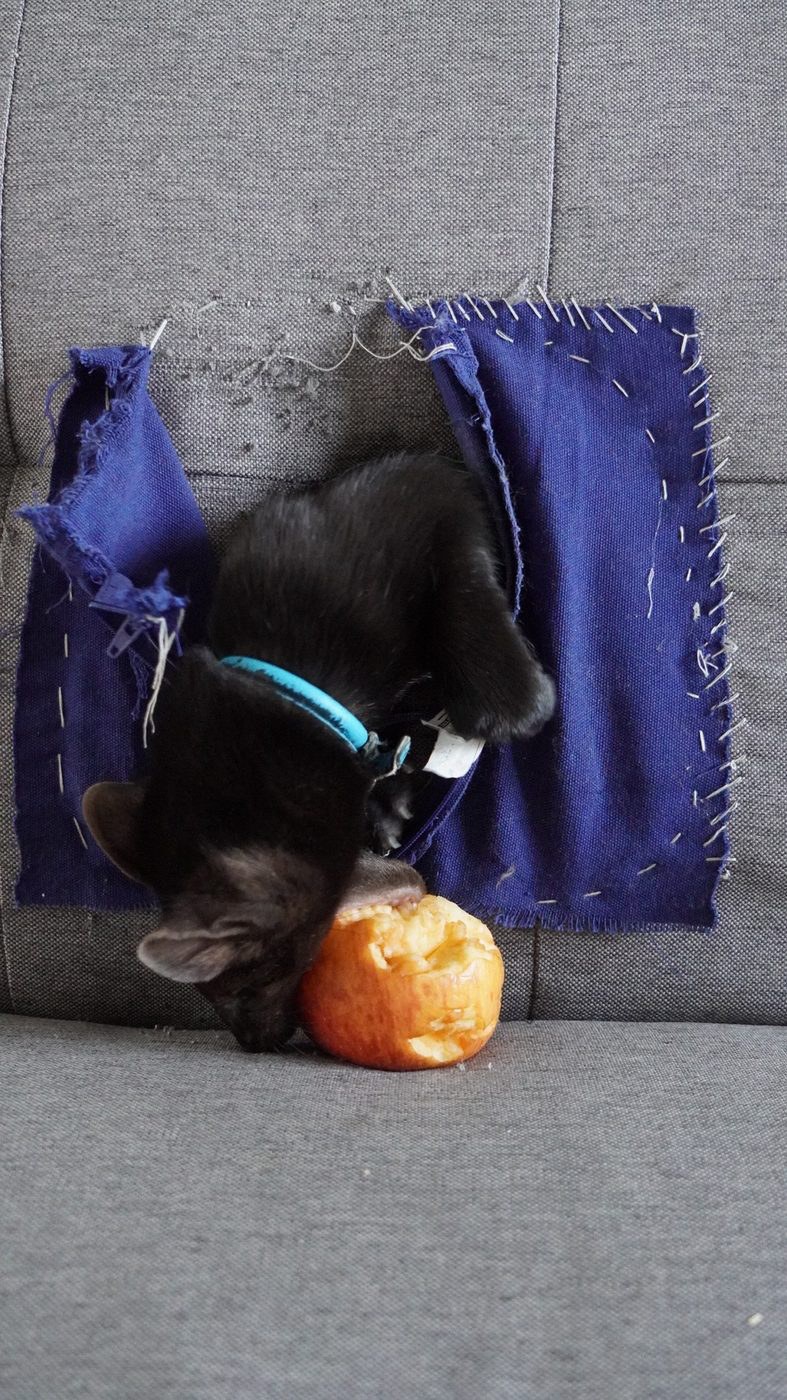
Why he digs. The instinct of a hunter of burrowing animals. Is there a hint of a cavity behind an obstacle — he will try to dig through that obstacle. Buddy once figured out that the sofa was hollow inside, dug through it and lived in it for a while. Well, why not, indeed? In such a cavity mice or someone else edible could well settle — how could one not check? This is not a malfunction; it is a built-in feature.
Why he runs in the wheel at night. Well, firstly, because you did not feed him in the evening — and a fed sable is a sleepy sable. And secondly, because he is a crepuscular animal, charged with energy that has to go somewhere. The wheel is his gym and his antidepressant in one. He races day and night — do not be alarmed, he needs it. The payoff: he dumped his charge into the wheel and not into, say, digging up your furniture. For an adult animal in rut, the wheel removes half the aggression; it can genuinely make your life easier.
Why he hides food. This is the autumn stockpiling instinct. Every autumn the “make stashes for winter” mode switches on, and he stashes, re-hides, and gets nervous if the reserves are small. Do not interfere: give him places for caches — and with dry food you can simply hand over a little bag; let him hide it and know that he will survive the winter. Why you must not clean out all the stashes — we will analyse in the territory chapter.
Why he dislikes guests. An adult sable is territorial, and a stranger on his land is a trespasser. He will choose one owner, be cold to the rest, and begin expelling the especially unwelcome. Introductions to guests must be done carefully and on his terms; you cannot force friendship. And note: he may start counting your own cat or dog as guests, even if he was friends with them before. After maturing, everything here is complicated.
Why he chooses one person. That is how he is built: by nature he is a loner, and even one friend is a lot for him — and it has to be earned with time, food and respect for his boundaries. This is not a betrayal of the other family members; it is simply the nature of a solitary predator created to survive in harsh conditions.
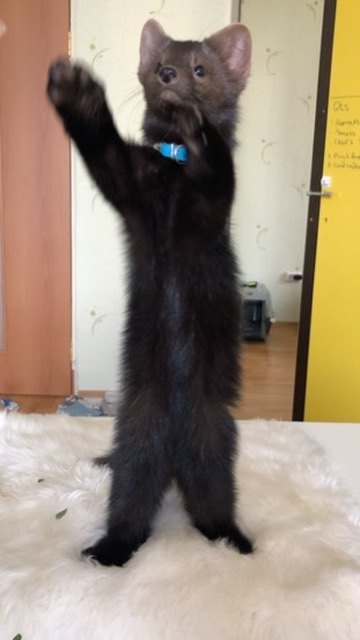
17.Relations With Other Animals and People
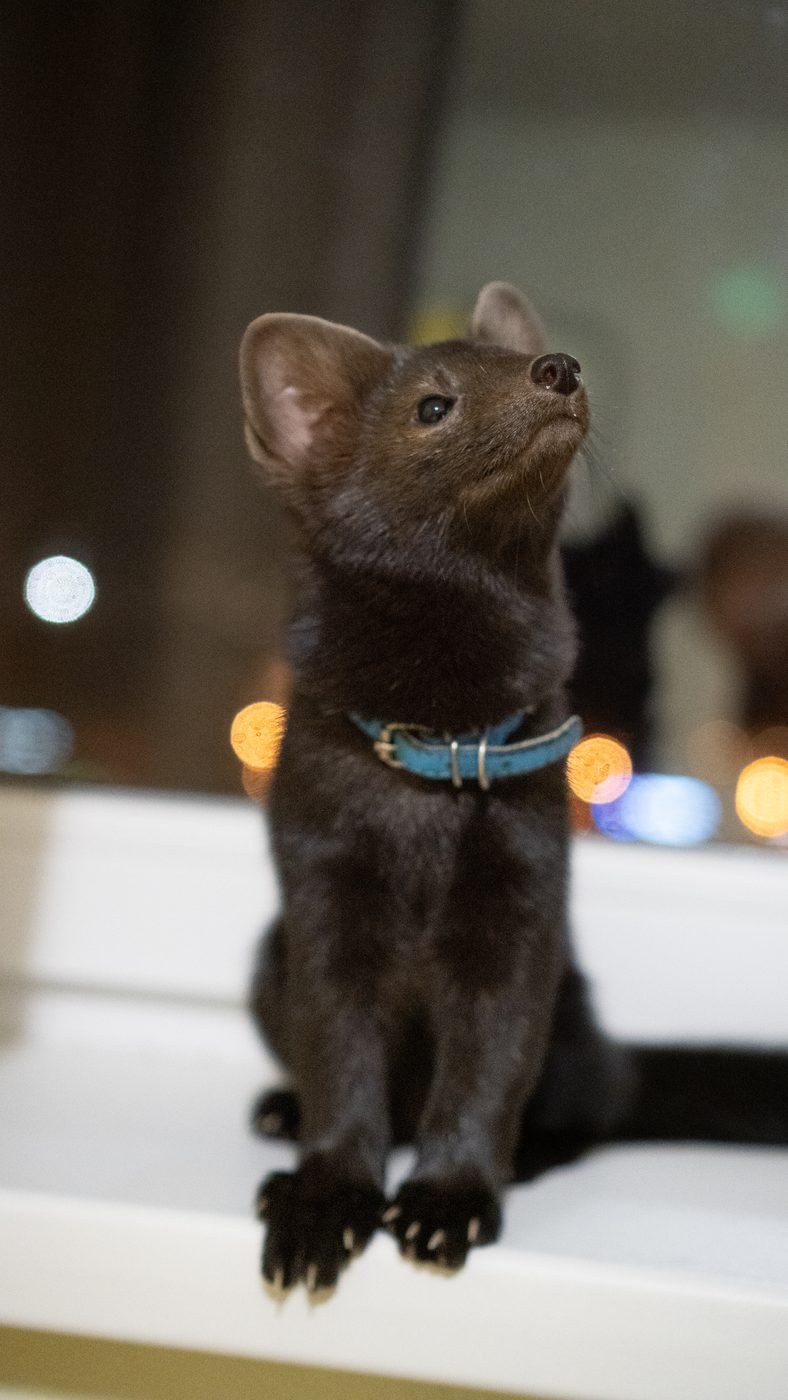
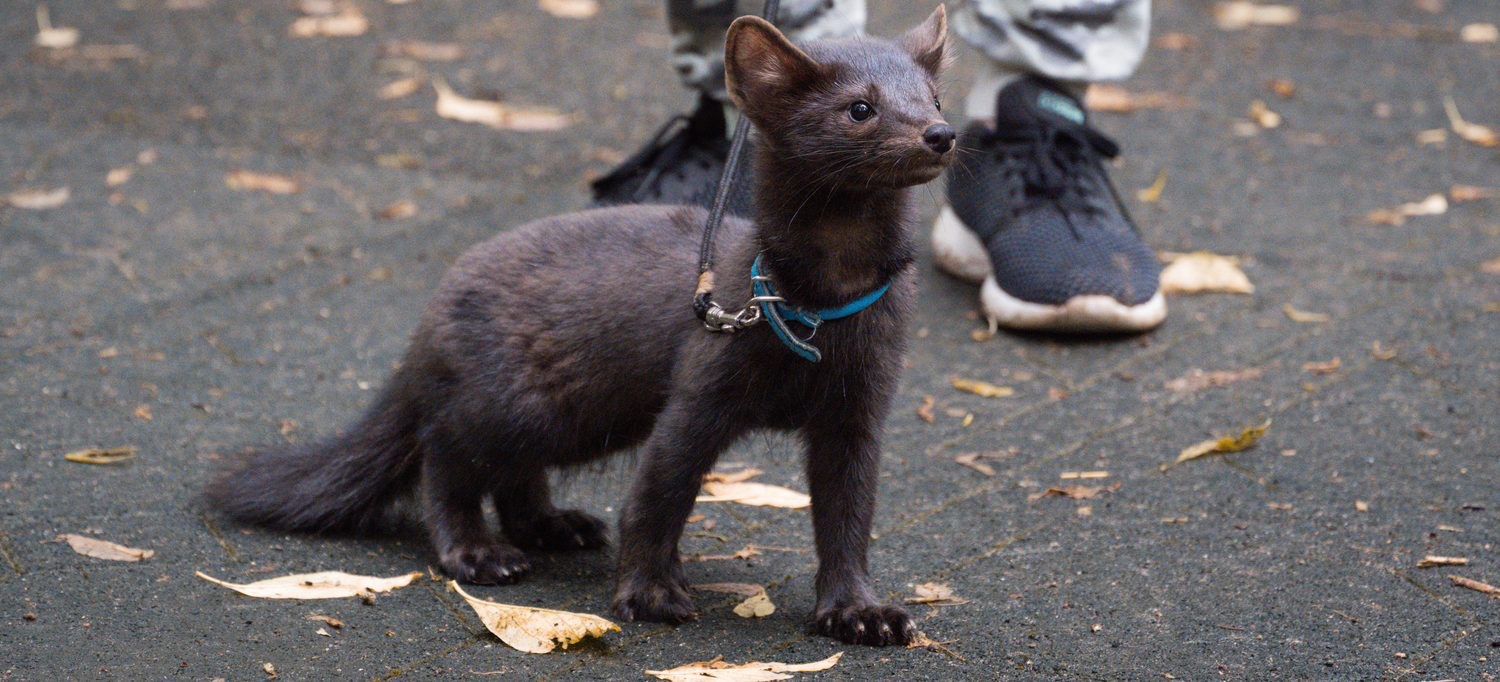
On a walk — only a harness and only next to you.
If you dream of a sable who will be friends with all your pets, better lower your expectations in advance.
A sable is a territorial loner. Not a pack animal, and the company of his own kind is something he does not need at all. In nature, adult sables meet mainly in the breeding season; the rest of the time each lives on its own territory. That is why relations with other animals are always a lottery.
18.Seasonality Decides Everything
In winter he is usually at his calmest. At this time Buddy can even tolerate Cheru (the borzoi) on his territory. Exactly until the dog steals a toy or raids one of his stashes. Then, of course, war again.
In spring the redistribution of territories begins; in summer the rut arrives — and territoriality soars. He will chase everyone.
In autumn, the stocking season begins in the sable world; one has to stock up on food for winter. They hide everything until the first snow. The animal is nervous, drags food all over the house, stashes it in the most unexpected places and remembers perfectly where each piece lies. And defends all of it fiercely.
It was in autumn that we had the most serious conflicts. The ferret came along then to show who was boss: he rubbed himself on all of Buddy's beds and brazenly, right in front of him, started eating his stashes. Well, and he got a fight.
So accept it as a given: in autumn the animals must be kept apart.
19.After Maturing, Everything Changes
While the sable is small, he can play beautifully with a dog, a cat or a ferret. Maturing changes very much: for some the first serious changes come at a year and a half, for others closer to three.
Never count on keeping two adult sables together. This is one of the most dangerous mistakes of a new owner.
Even if in childhood two pups sleep in an embrace, play and look like best friends, it means nothing. At some point the game turns into a real struggle for territory. And from the outside it still looks like a game. Until the morning when one of the sables simply does not wake up.
So if you are planning two — immediately plan for two full separate enclosures, so the animals can be kept apart. And it is critically important to catch this transition in time. It does not matter whether it is two males, two females or a mixed pair. Adult sables cannot be considered permanent neighbours.
20.Relations With People
His own family the sable usually accepts. To someone he will bond more strongly, to someone less, but the people he grew up with he most often considers his own.
With strangers, everything is far less predictable. Someone he may love from the first meeting, and someone he may dislike without any understandable reason.
Buddy, for example, loves girls very much, and almost always bites men. But there are exceptions here too. When Buddy was growing up, he often played with one guy who smoked. Many years have passed, and Buddy still runs to every man of a similar build who smells of cigarettes and tries to make friends. But, realising it is not that person, he quickly loses interest and may even start showing hostility.
I have a friend: as soon as he sees her, he runs to her, rummages in her hair and licks the top of her head. Why so is unclear, but it is love. And there was an elderly woman who came to help care for them. He simply hated her and always tried to bite her.
How will it be with yours? God only knows. This you will only find out yourself.
That is exactly why you should never count on a sable being equally friendly to all your guests. It is better to organise the space in advance so that the animal can be calmly isolated at any moment — without stress for him and without blood for those around.
21.Territory: Your Home Through a Sable's Eyes
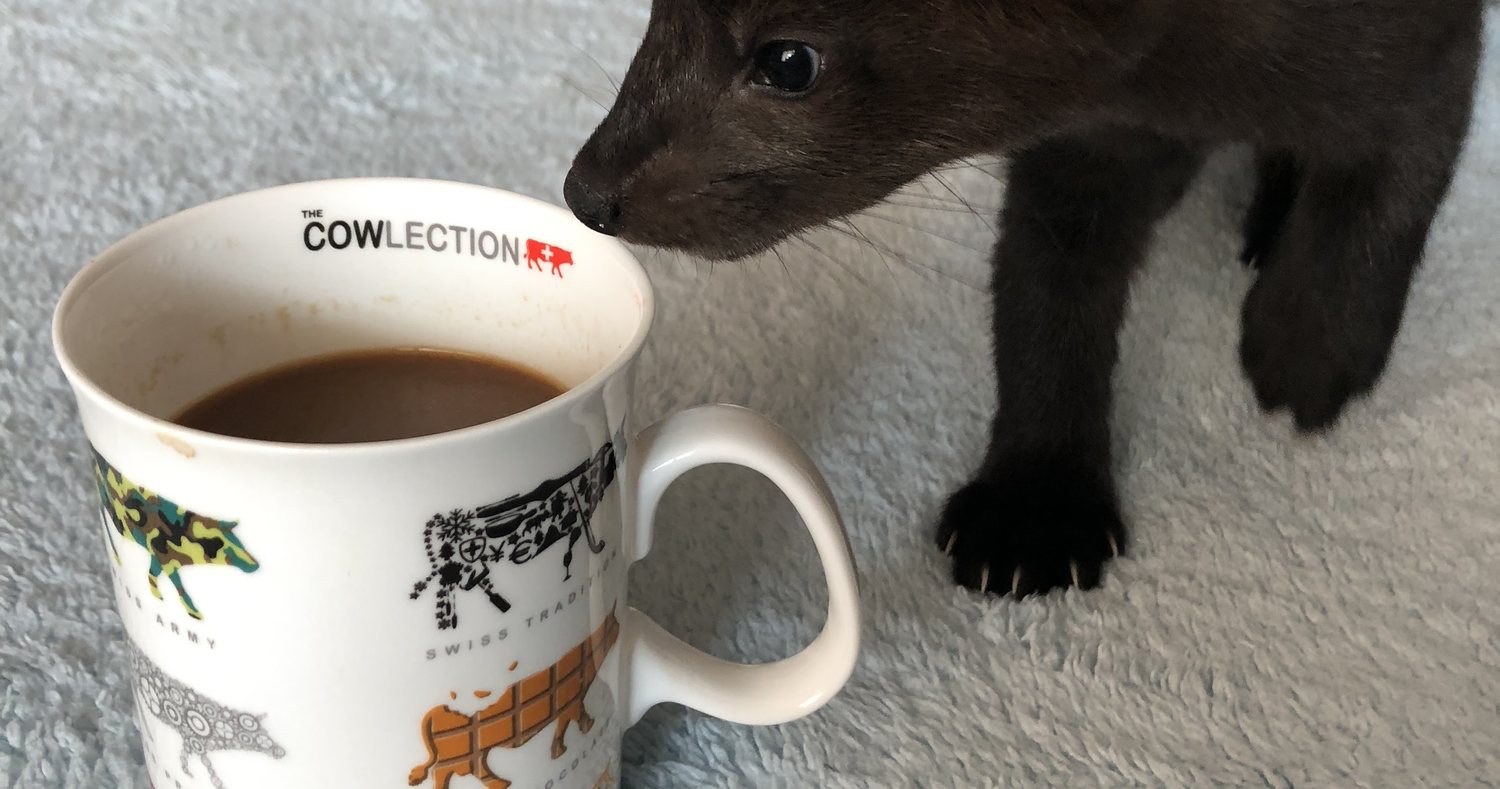
His own spot and his own treasure — the territory is claimed.
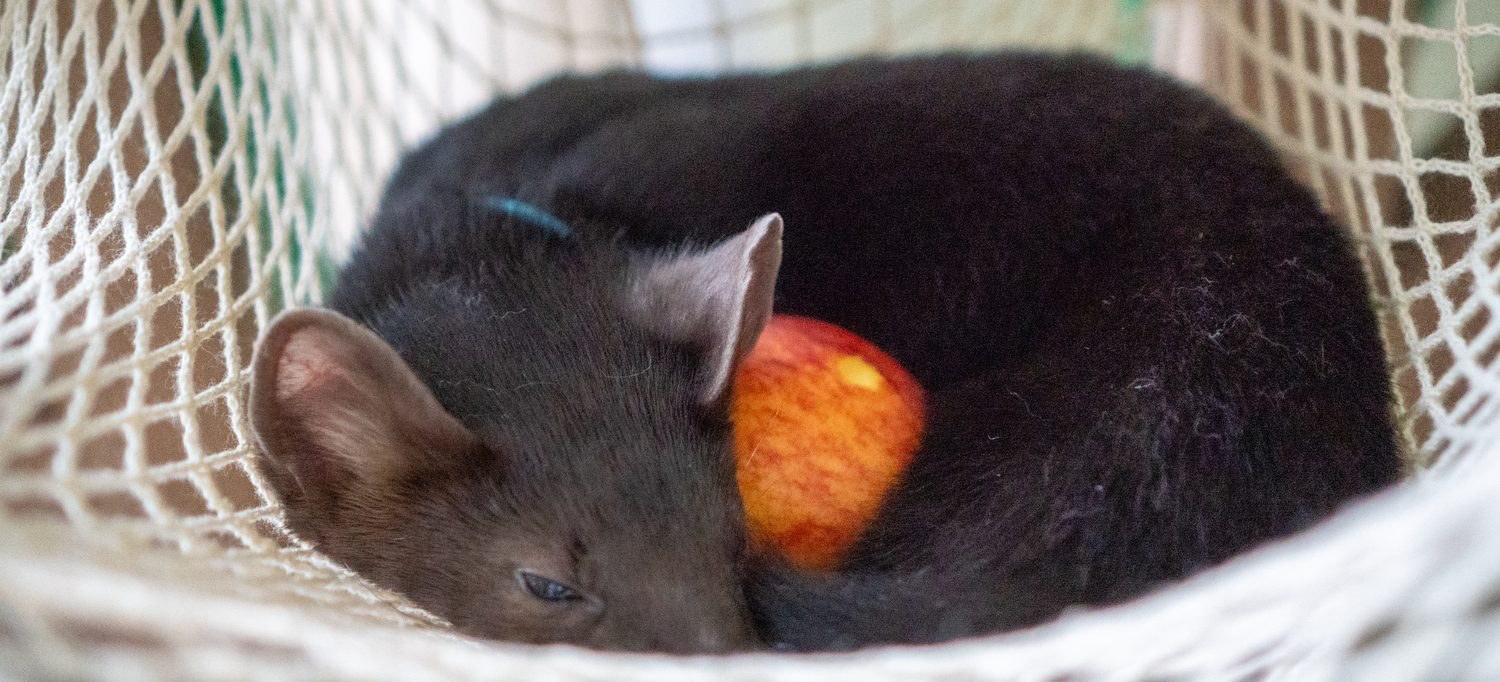
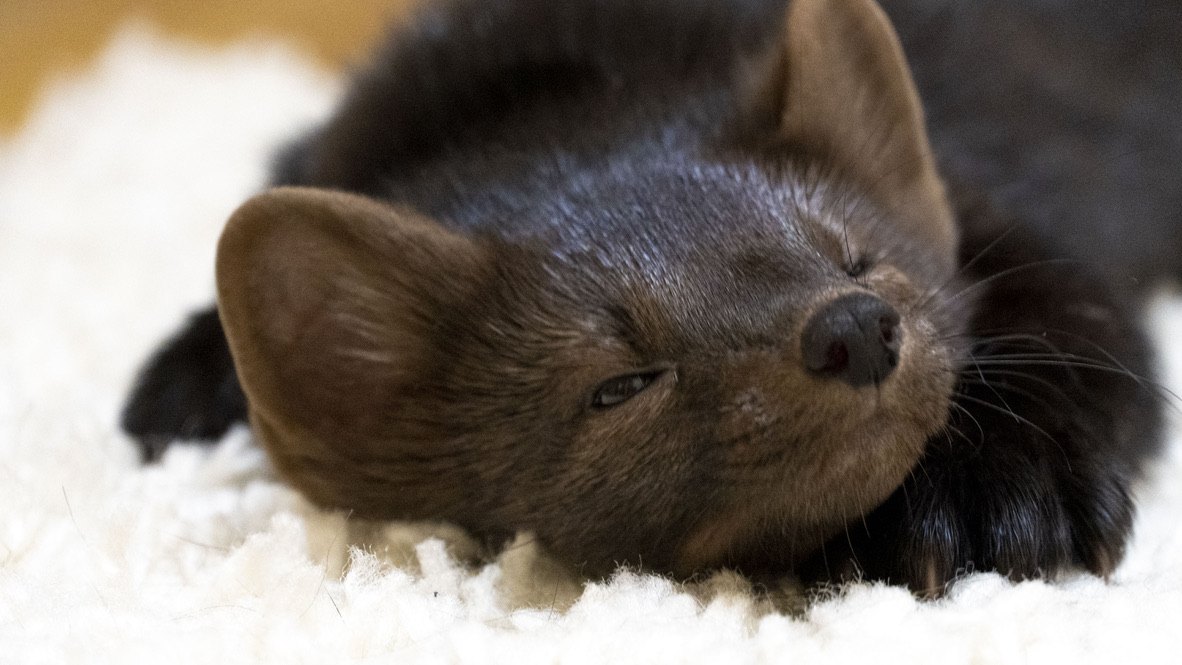
Fell asleep — means the place is recognised as his.
Learn this once and for all: a sable needs his own territory. Not a corner, not a basket, but a piece of space that is entirely his. This is not a whim and not a luxury — it is what half of good behaviour rests on. Give him territory and you remove a heap of problems at once. Don't, and you will be dealing with them for years.
An enclosure is a solution, not a cage. Remember the difference. A small cage you lock the animal into is a prison cell, and he behaves accordingly: screams, chases you off, goes wild. A big enclosure is his kingdom, which he goes to by himself and where he is the master. The same animal is unbearable in a cage and calm in an enclosure. The only difference is whether he has somewhere to retreat and something to call his own.
It is the enclosure that solves both the marking story and territorial aggression, which the next chapter covers in detail. In short: while the territory is blurred, the animal marks and guards the whole flat. Give him a clear “this is yours” — and the marks and the stashes gather in one predictable place. And nobody suddenly attacks you when you simply decide to sit on your favourite sofa because somewhere under the cushion he has a supply of apples.
What the enclosure should be like and what must be inside. During the rut you will often be unable to let the animal out, so everything necessary must live right in the enclosure: shelves, climbing structures, a shelter and a wheel. About the metal: take something that does not rattle; ideally a grid with bars about 4 mm thick and gaps no larger than 2.5 cm, otherwise he will simply squeeze through. A grid combined with wooden walls works well — shelves attach to them conveniently. The enclosure must be spacious and climbable in every direction: 1.5–2 metres long, a metre wide and a metre high is already decent, and bigger is always better. Fix a wheel inside, preferably a silent one with side mounting. Rearrange the shelves from time to time, hang little bags and pockets — the animal needs not only area but novelty.
One more important point, and this one is more about your own comfort — the noise level. A sable uses the whole volume of the enclosure: he runs, climbs and jumps in all three dimensions. And if he suddenly takes it into his head to hang on the mesh or leap onto the front wall, the structure must not rattle so loudly that the whole flat can hear it.
So whenever possible, choose the stiffest and quietest constructions. Sturdy metal grids or wooden enclosures with plexiglass elements work well. In the second case, good ventilation must be thought through in advance.
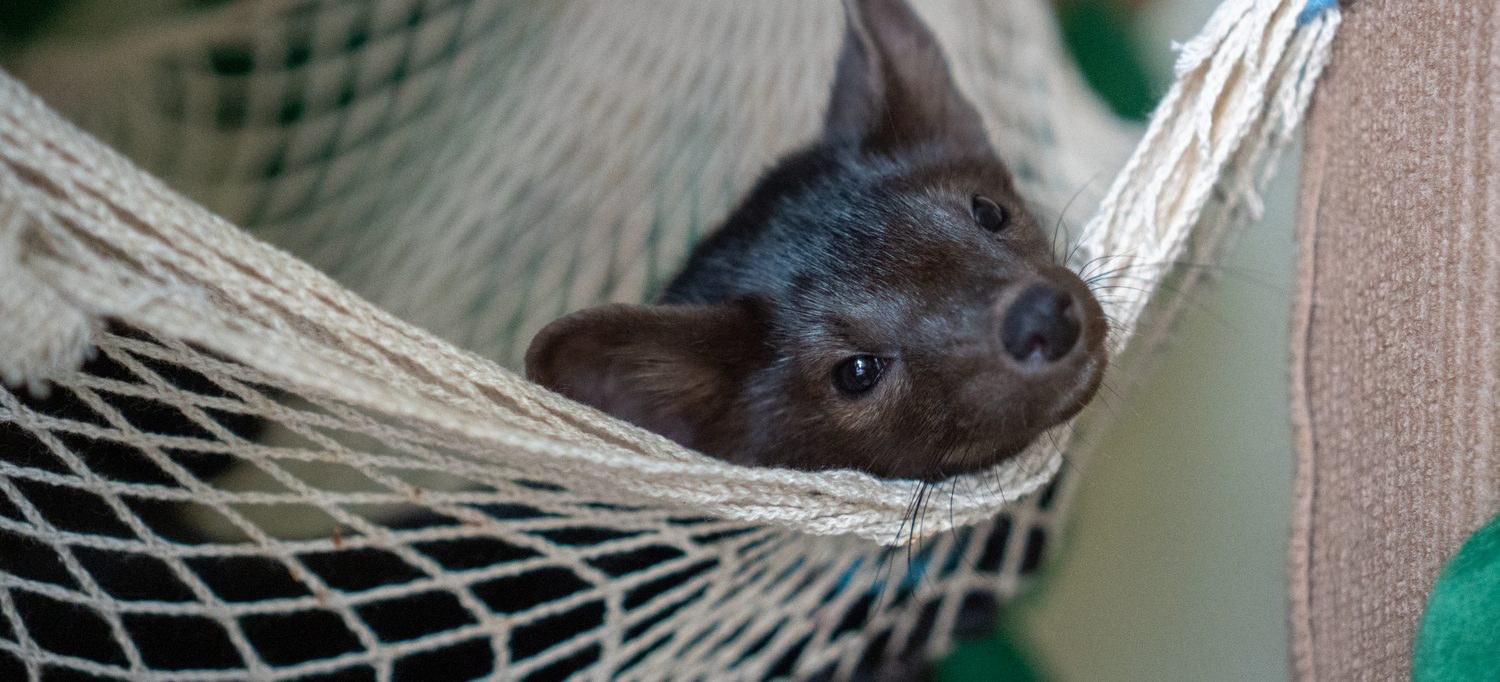
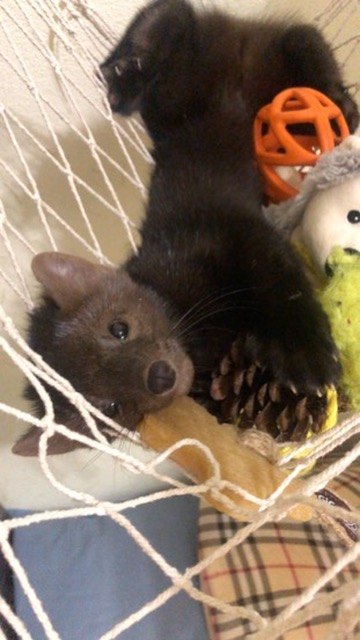
Separately about the hammock — this is a safety question. There must be no mesh hammock in the enclosure: a pup can get tangled in it and suffocate. If you want a mesh one, hang it somewhere in the room where the animal is under your supervision. In the enclosure — only an ordinary fabric hammock, without cells.
A dark corner and a house. A sable is a crepuscular animal; he cannot stand being in bright light all day and starts getting nervous. He needs a dark nook where he can crawl in and sleep. The best option, in my experience, is a dog kennel: it is easy to clean and lasts a long time. Soft houses also work, but the fur is harder to clean off them, so a soft house lives until the first moult. Without such a refuge the animal never relaxes — and that means his character spoils too.
Stashes, and why you must not clean out all the hiding places. In autumn the stocking-for-winter instinct switches on, and the animal begins hiding food all over his territory. For him these caches are not rubbish but a guarantee that he will survive the winter. Clean them out completely — and with your own hands you drive the animal into anxiety: no supplies, the winter will kill him. So in his enclosure we do not touch the stashes. If it gets cluttered — we quietly replace the rotten with fresh, but we keep the storage place itself. Let him hide, re-hide and know that he is safe.
And here is a little trick that saves nerves. The stashes he has dragged all over the flat I collect and carry to his enclosure. And inside the enclosure itself I touch nothing. That way the animal learns: the territory for supplies — here it is, right here, nobody pokes around here. The flat gradually stops being a warehouse, and the enclosure becomes his real home.
Territory is not about shoving the animal into a corner. It is about giving him a point where he is king and where he is calm. A sable who is calm on his own living space is a sable you can live with.
22.Marking and the Toilet
By every door — its own news.
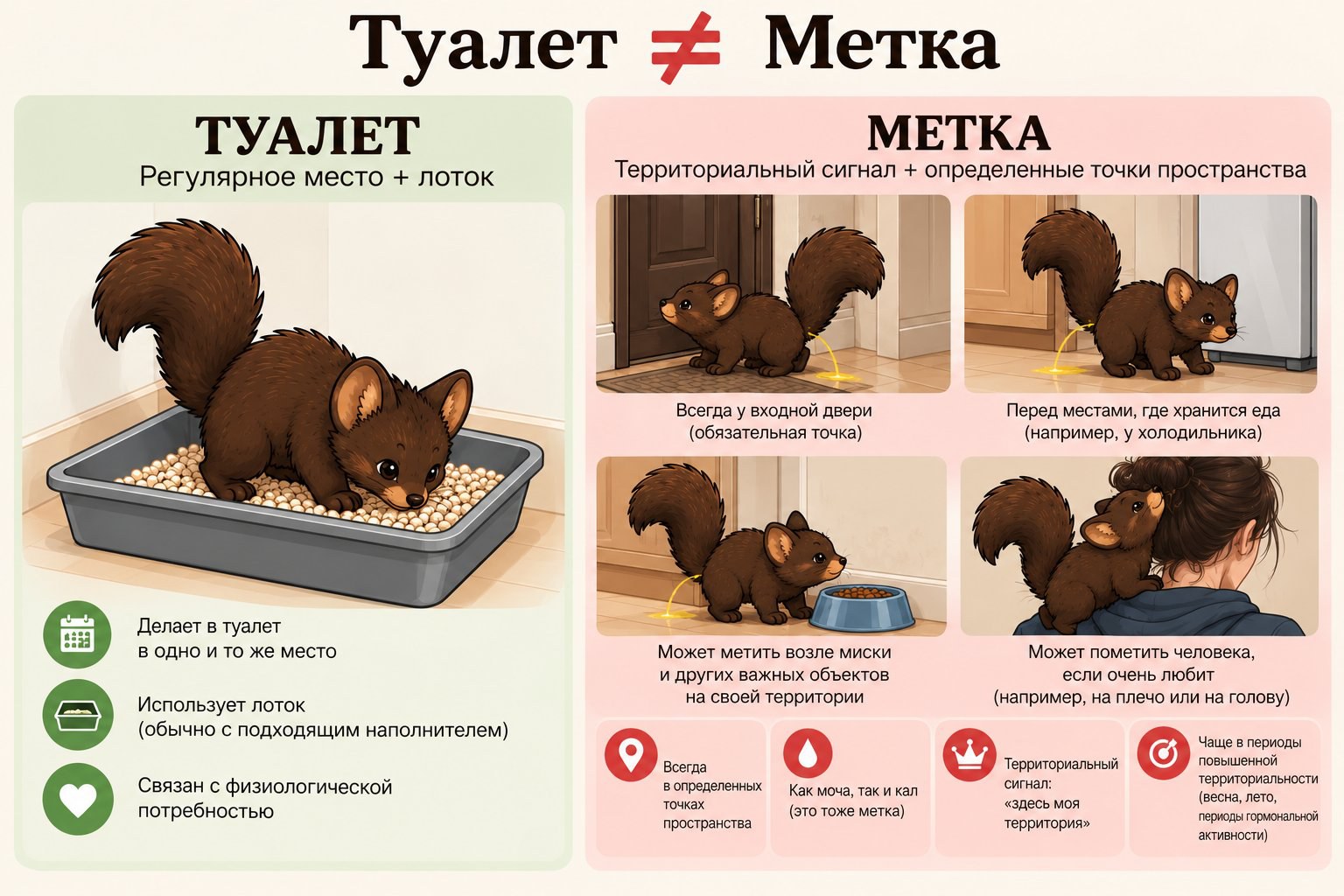
The topic where almost all beginners stumble. Because marking and the toilet look the same to you — a puddle and a pile — while for a sable these are two completely different matters. And the fact that they seem one and the same to you is your problem, not his.
First the good news, about the toilet. A sable can use a litter tray and can be trained to it; this is an ordinary household matter, entirely solvable. The litter matters. Better natural: granulated wood pellets. To hold the smell better, I mix in Catsan with charcoal or tofu litter. But note: Catsan and tofu on their own are very dusty, and it is uncomfortable for the animal to sit below in a cloud of dust. That is why I mix rather than pour just one thing.
And now marking — and this is a completely different story. A mark works differently: it is a message. A way to tell the world “this is mine” or “you are mine.” It has nothing to do with the tray, and “training him not to mark” is impossible, because for a sable marking is roughly what talking is for us.
The addressee of the mark changes with age; we already went through this in the age arc. While he is a baby, he marks you, the owner, and will happily wet you from head to toe. Fright and scolding are pointless and hurtful: a pup marks its mum, and you are now his mum, and this is literally a declaration of love, strongest precisely in childhood. After one year the addressee changes: he stops marking you and takes up the territory — doors, corners, food, stash places. From “you are mine” it turns into “this is mine.”
And here the enclosure saves the day again. I talked about this in the previous chapter and will repeat it, because it truly works. While the animal's territory is blurred, he marks the whole flat. As soon as he has his own clear place, the marks gravitate there. My Buddy used to mark every door in the house, and now that he has an enclosure, he marks only its door. Guests left — he runs to put a mark by the enclosure door: this is mine, no trespassing. One door instead of the whole flat. That is the entire difference.
So do not wage war on marking. Give the animal a toilet with decent litter and his own territory — and the question turns from a catastrophe into a household trifle.
23.Moulting
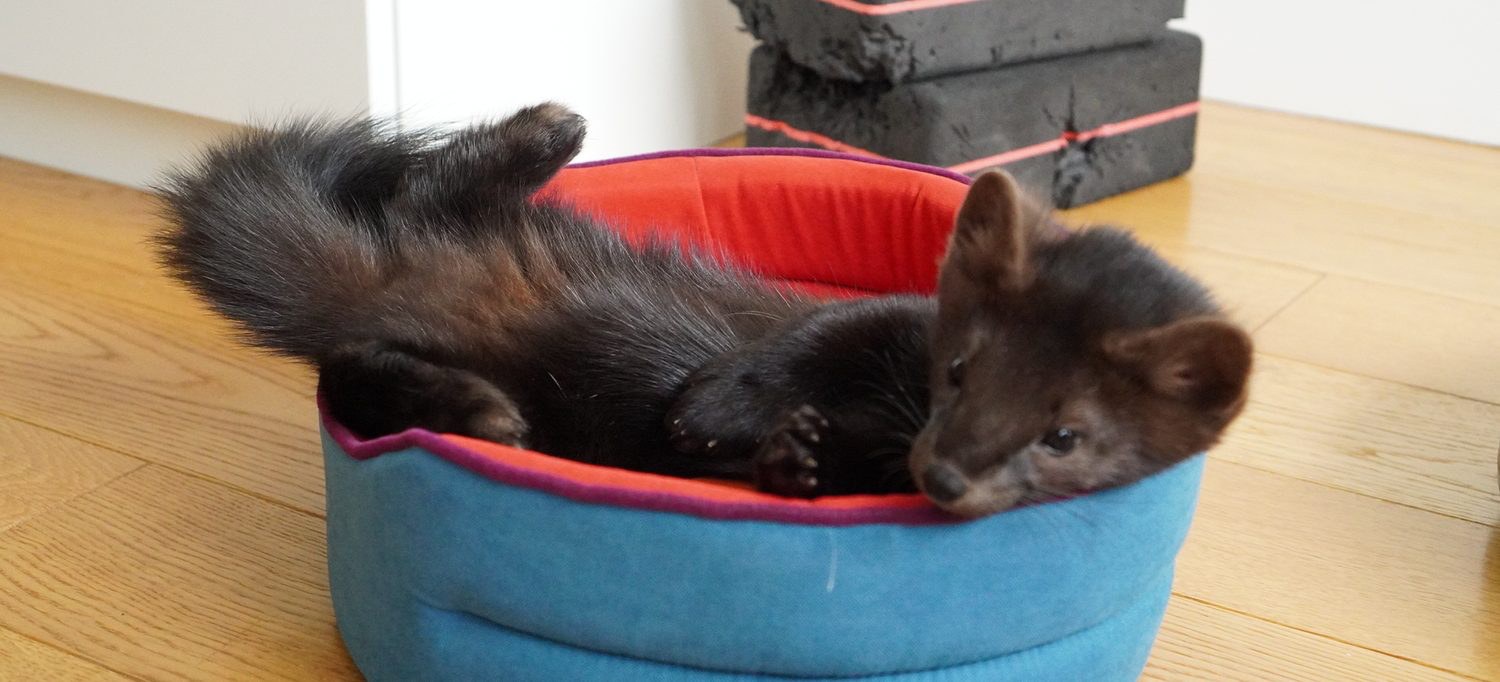
The bed collects undercoat better than any vacuum cleaner.
Twice a year the sable moults, and this is not cosmetics but a seasonal change of outfit. In spring he sheds the dense winter coat for a lighter one; in autumn he grows the warm one back for the cold. The mechanism is tied to day length and temperature, so in a flat with its eternal warmth and electric light the moult may not go by the textbook but smeared out and strange. This is normal.
What awaits you in practice. There will be a lot of fur, in places in clumps, the whole flat in undercoat. Here you simply stock up on patience and clean more often; it will pass by itself.
And now the important part — the character during moulting. When the coat changes from winter to summer, the animal can be irritable, and this is normal. Everything itches, his skin is prickly, it is uncomfortable outside the fur, and because of that he is angrier and twitchier than usual. The paradox is that he does need to scratch, but he will most likely not let you comb him: touch in this period is doubly unpleasant. So do not be surprised by flashes of grumpiness in the coat-changing season; he has not gone bad — he is physically uncomfortable.
How to help. Do not comb him by force; if you go to war you will get bitten, and the animal will be right. If he allows it — gently and little by little, better with a treat, the way I trim Buddy's claws. If he does not allow it at all — leave him alone, he will manage himself; that is what he needs rough surfaces and shelters to rub against for. Watch that the fur does not mat, especially with an elderly animal.
And keep in your head one connection that matters for this whole guide: the coat is a mirror of nutrition. A dull, brittle coat that sheds out of season often speaks not of moulting but of a crooked diet. If something is wrong with the fur — first check what and how you feed the animal. This was covered in detail in the chapter on feeding.
24.Veterinary Care
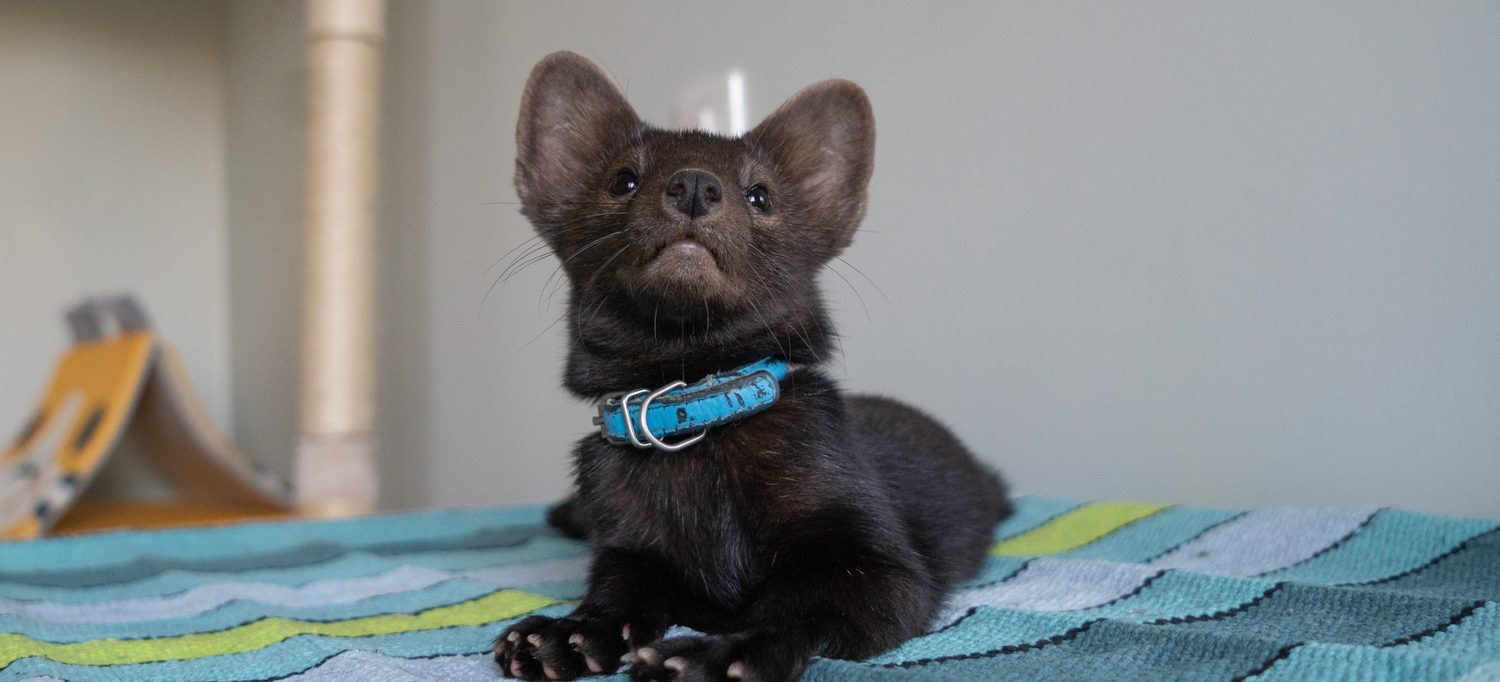
Claws grow back faster than you think.
I will start with the thing people think about last and should think about first. Find the doctor in advance, before the animal even appears in your home. On the evening when the sable falls ill, it will already be too late to search.
25.Who Even Treats Sables
An ordinary neighbourhood cats-and-dogs clinic will most likely be no help to you. A sable is an exotic, and you need an exotics vet who understands mustelids: their physiology, dosages, what they get sick with. Such a specialist is hard to find anywhere, so work out in advance whom you will take the animal to in trouble and how long the drive is. Googling “exotics vet near me” at night with a suffocating sable in your arms is a so-so plan.
26.Vaccination — and It Is Not Optional
The main deadly threat to a sable is canine distemper. For mustelids it is lethal, and there is one protection against it — the vaccine. Vaccination is mandatory.
The second important shot is rabies. Many think: since I don't walk my animal outside, there is nothing to vaccinate for. But you and I already know that a sable loves escaping from home. And that is only half the trouble. Sables are prone to neurological ailments, for example self-biting. And now imagine: an unvaccinated animal has neurological symptoms, and they look exactly like rabies. Such an animal may simply be refused at the clinic, and, honestly, not without grounds. And your assurances of “but he never goes anywhere” will help no one here.
27.Self-Biting
Separately I want to tell you about a disease that occurs in sables and that a future owner absolutely must know about. It is called self-biting. With this disease the animal begins to harm itself, sometimes to the point of completely gnawing off its own tail. Before this the sable may show strong nervous agitation, scream loudly, panic or be unable to settle.
As of today, the disease is considered hereditary and linked to disorders of the nervous system. It cannot be fully cured, so the main role here belongs not to treatment but to prevention. It is for this reason that good fur farms do not allow animals prone to self-biting to be bred. During grading they assess not only the quality of the fur but also the animal's behaviour, including signs of heightened nervous excitability and aggression.
That is why the sable's origin matters enormously. I do not recommend buying animals from resellers or choosing an option only because it is cheaper. A sable absolutely must have documents confirming its origin. They are needed not only from a legal point of view but also let you understand that the animal comes from an establishment where full breeding work is carried out.
Of the establishments I know personally, I can recommend the Saltykovskaya and Pushkinskaya fur farms. Among private breeders I can name Valentin Polevoy. There may be other good breeders, but I am not personally acquainted with them, so I cannot recommend them.
Even a healthy sable handles strong stress badly. That is why all moves and long trips with Buddy we go through only with calming medications prescribed by the veterinarian. Thanks to this he endures them calmly.
Saving money on the sable's origin is definitely not worth it. Good breeding work significantly reduces the risk of getting an animal with severe behavioural problems for which there is no effective treatment today.
28.If You Plan to Travel — the Order Is Critical
First of all, the chip. All procedures with the animal are best done when the chip is already in place: then everything is recorded for a specific animal and no one has any questions.
The rabies shot — strictly after the chip. A vaccination done before chipping simply does not count: there is no way to prove it was this animal that was injected. You will have to vaccinate again, and that is plus twenty-one days of waiting added to your plans. By the way, this is mistake number one for everyone transporting animals across borders.
Then renew the vaccination strictly on schedule: overdue by even a day — and at the border you count as unvaccinated, and the next shot becomes primary again, with its own twenty-one days. Gaps and holes in the passport are exactly the reason the animal goes nowhere with you. And note: if you are taking the animal out of the country, you will need castration — but about that a bit lower, in its own chapter.
And a caveat without which this cannot stand. All these rules are written for dogs, cats and ferrets. The sable is not on that list, and for it every country decides for itself: its own requirements, its own permits, its own papers. So do not count on it being “like with a cat.” Research the route in advance and separately.
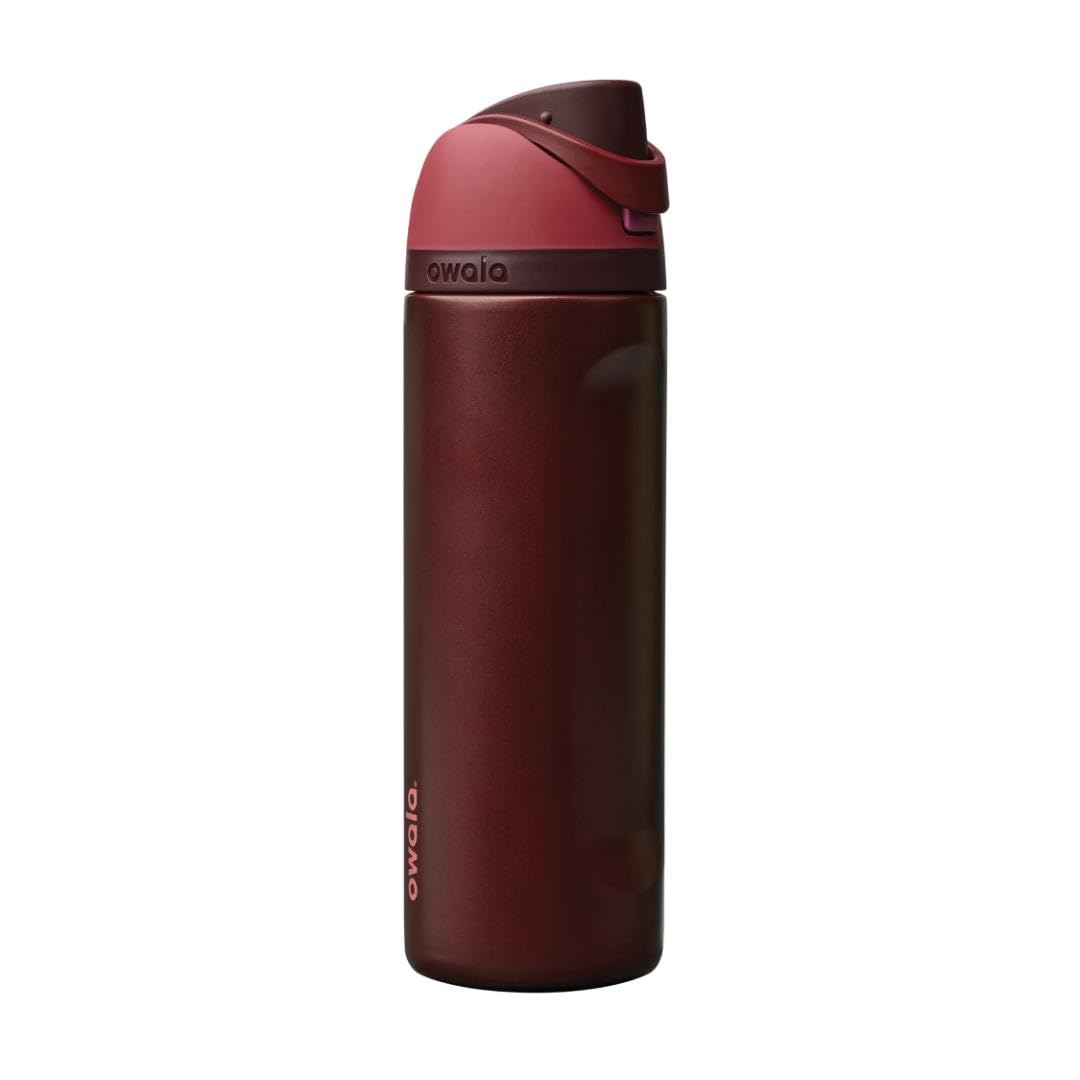
Water for the animal on the road
Owala FreeSip Bottle 24 oz
29.Castration With an Implant, or an Implant Without Castration?
This is one of the hardest questions in keeping a sable, and there is no universal answer here.
Many castrate males at an early age, hoping to get a calmer and more convenient animal. In my observations, this does not always work.
Yes, castration usually softens the first hormonal surge and can postpone it somewhat. If an uncastrated male often begins maturing at around 1.5–3 years, in a castrated one these changes may appear later and pass less sharply. But castration does not fully solve the problem.
And then begins what few people warn you about. Castration sets off the adrenal story, which we will analyse below. Of the ten castrated males known to me, it manifested in all of them. And it is important to understand: this is not “castrated today — problems tomorrow.” The disease develops over years and may manifest 2–4 years later. The result: excessive aggression towards people and towards guests, and an animal who goes on the implant for life — only now not for the rut, but to keep the unbalanced hormonal machinery in check.
The uncastrated ones I have observed live differently. There were three of them: two I saw personally, with the owner of the third I correspond. One is about five, another about six. Their storm thundered through from one and a half to 3–4 years: I will tear everyone apart, I am in charge. And then the storm passed — and the animal is stable. All three treat strangers normally. There is no excessive aggression outside the rut.
That is the whole difference, and it is not about “calmer or meaner.” It is about predictability. With an uncastrated one you know: there will be a rut, there will be this kind of period, it will end. With a castrated one you get a floating starting condition and live on the implant.
So my scheme today would look like this: do not castrate, provide an enclosure, the implant for the rut — and let him sit at home angry and grumpy; the season will pass. The rest of the time, the animal beside you will be calmer.
I will say honestly: I have seen three uncastrated ones, and I know a dozen castrated. This is observation, not science. But a fairly unambiguous observation.
A separate case — if you are taking the animal out of Russia. Then you have no choice, and the reason is non-obvious. The sable is an animal that is very hard to export: there he is considered a national treasure, and nobody intends to let the gene pool out of the country. For the animal to be released, you must prove that he has no breeding value, that is, that he is incapable of reproduction. This is proven in exactly one way. So until they start cloning, that is your entire procedure. Doing it, like everything else, is best done with the chip already in place, so the papers are tied to a specific animal.
And to put it very shortly: get a girl.
Here the testimony is unanimous. Absolutely all owners of girls who previously had males say the same thing: heaven and earth. Two different animals.
She will not be sugar for you, of course. No sweetie; the character is right there, everything as with everyone. But against the background of what you will go through with a male, she is a little hairy angel with teeth.
30.Suprelorin — Your Main Tool for the Rut
This is an implant, chemical castration that works for one season. It is placed when the animal begins hormonal flare-ups, and then repeated by season. It does not work instantly. The first weeks, sometimes up to two or three, the restructuring goes on, and at first the animal may become even more active and aggressive than he was. This is a normal rebound; then it lets go. With Buddy it varied: sometimes he calmed down by the second day, sometimes he walked around frantic for two weeks and only then exhaled.
And a critical moment on which both money and nerves burn. Suprelorin is stored cold, and the cold chain must not be broken. If the implant warmed up somewhere along the way, it loses up to half its strength, or does not work at all. I had a year when I placed Buddy's implant twice: the first did nothing because it had been ruined in storage. Buy from a trusted supplier and watch that it reaches you cold.
31.Castration and the Adrenals
After castration, mustelids develop a specific adrenal problem. The mechanism is best studied in domestic ferrets, and it cannot yet be transferred to sables one to one. But it must be taken into account, and here is why.
Of the ten castrated sable males known to me, this arose in all of them. Every single one. I will say honestly: these are the animals who were brought in for a hormone panel at all — the sample is not scientific. But if you castrate a male, in your place I would proceed not from “maybe it will pass me by” but from “when.” Alas.
For a sense of scale: in ferrets this is one of the most common diagnoses at all, affecting about seventy percent of the population in the USA. And the strongest link of this disease is precisely with surgical sterilisation. So your sable is unlikely to be some lucky exception.
In an uncastrated male, the pituitary gland releases luteinising hormone, LH, which stimulates the testes to produce testosterone. When there is enough testosterone, the body receives a signal to reduce the stimulation.
After the testes are removed, this feedback disappears. The pituitary continues to release LH, but testosterone is not produced by the testes, since they are no longer there. In ferrets, long-elevated LH can begin acting on the cells of the adrenal cortex. Some of these cells gradually acquire the properties of sex gland cells, proliferate and begin producing sex steroids.
Usually this is not about cortisol, and not only about testosterone. Altered adrenals may release androstenedione, DHEA, oestrogens, 17-hydroxyprogesterone and other steroid hormones. That is exactly why, several years later, signs of hormonal activity may reappear in a castrated animal.
This process is often called hyperadrenocorticism; however, for ferrets the term is not entirely accurate. Unlike classic Cushing's disease, the main problem here usually lies not in excess cortisol but in the excessive production of sex steroids by the adrenal tissue.
It is important to understand that the adrenals do not simply “replace the testes” right after the operation. Castration removes the normal hormonal feedback, the constant LH stimulation persists, and against this background hyperplasia or an adrenal tumour may develop over time. In Buddy and a number of other sables, this process is evidenced by an elevated level of 17-OH progesterone in tests, which points to a problem similar to the common one in ferrets.
By what signs to catch it. A castrated animal has one quite readable sign: excessive aggression. Not seasonal grumpiness, but precisely overdoing it. The age floats: for some it started at three years, for some at four, and for some at two.
It is important to understand that this disease does not develop at once but over several years, from 2 to 4 from the moment of castration.
What to do about it. We began placing the year-long implant preventively, without waiting for the animal to be overwhelmed. And everything came back to normal.
Only let's have no illusions. He will not become a sweetie; the character is not going anywhere, and an adult predator remains an adult predator. But it removes the excessive aggression.
32.Claws
If the sable does not live in a huge outdoor enclosure where he can run and climb trees and stones to his heart's content, the claws will have to be trimmed regularly. And this is not a manicure for beauty — things are more serious here.
First, a long claw is an injury risk. The animal catches it on fabric, carpet, furniture, on anything in your home, and next comes a twisted toe or an injured paw. Do you need that?
Second, overgrown claws bother him himself. Scratching normally is already painful, and in active play they catch on every surface in turn.
In nature this problem solves itself. A wild sable covers dozens of kilometres in a night; he is constantly racing over stones, roots and trunks, and the claws wear down on this harsh taiga naturally. At home you will not arrange that however much you want to. So we trim.
How to accustom him to trimming. It is best to start from earliest childhood. And do not try to trim right away. First teach the animal to take calmly the fact that you simply hold his paw.
The easiest way is to combine this with something very pleasant. You give a favourite treat and while he eats you gently hold the little paw for a few seconds. Then longer, then longer still, until he stops paying attention to it altogether.
For this I had a special slow feeder you cannot eat quickly from. I would smear curd into it, and while Buddy concentrated on licking out this treasure, I simply held his paw. Thanks to that feeder, today we trim claws at home by ourselves: no vet, no anaesthesia, no extra stress.
The main rule is not to hurry. First calm touching. Then acquaintance with the clippers, so the piece of metal stops being scary. And only then the trimming itself. Then for the sable it will become an ordinary part of life, not a reason for war.
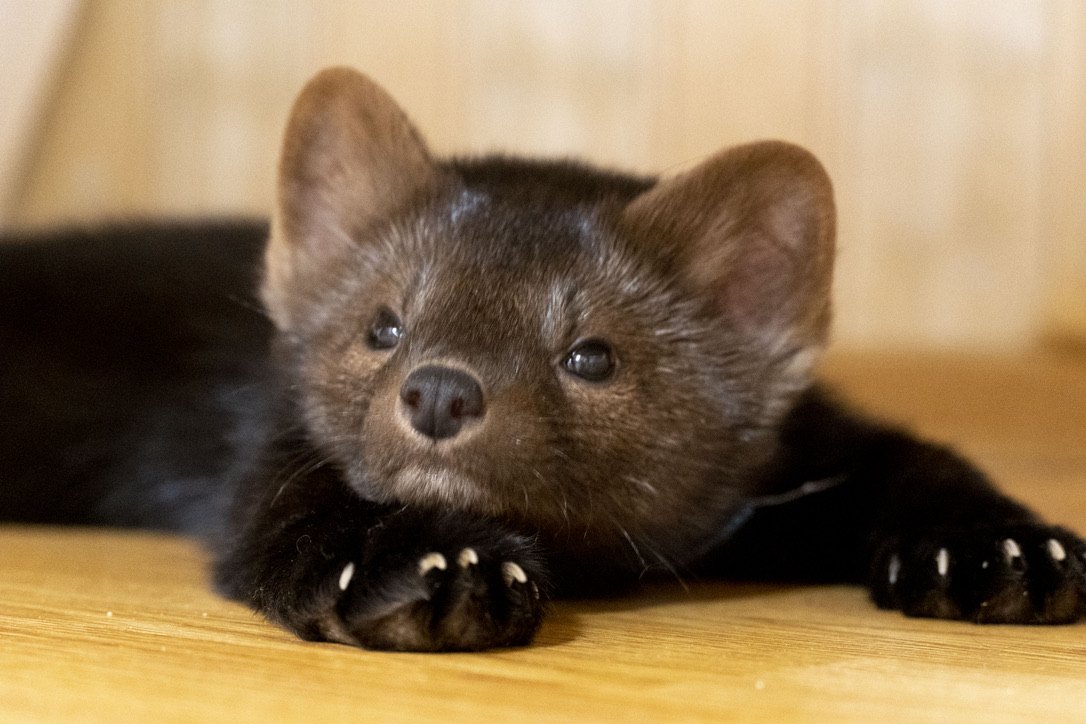
33.The Most Common Reasons for Emergency Vet Trips
Heatstroke. Sables tolerate heat very badly. If you suspect heatstroke, you must act at once. Move the animal to a cool place, cool the paws, lay him on a damp cool surface, offer water. After first aid, see a veterinarian as soon as possible.
Intestinal blockage. Probably the most common reason for emergency vet trips with young sables.
Remember a simple rule: a sable is a poop-producing machine. If he keeps eating but has stopped pooping, that is a reason to be wary.
Young sables are ready to test absolutely everything with their teeth. Rubber, silicone, foam, wires, earplugs, pieces of toys, seals, hoses — all of this can end up in their stomach. Buddy finally stopped dragging everything into his mouth only at about seven years old, although even now I do not leave him alone unsupervised.
Our most unpleasant story happened when Buddy climbed under the washing machine and gnawed off a piece of rubber hose. We were already preparing for surgery, but fortunately, after some time he managed to pass it on his own. That was probably the most dangerous case in all this time.
That is why my main advice is very simple: an enclosure. When you have taken your miracle to the vet several times in a row because of yet another intestinal blockage, a good enclosure stops seeming like a restriction of freedom and starts being perceived as a means of safety. All the rest of the time, while the sable walks around the flat, he must be under your observation only.
Gastrointestinal infections. Another problem worth remembering, especially if you feed raw meat.
Sables love making stashes. If given the chance to hide a piece of meat, after some time he will certainly try to eat it. That is exactly why the quality of the meat must be impeccable, and old stashes must be found and removed in time.
Personally, at some point I gave up raw meat entirely and switched Buddy to holistic-class dry food. One of the reasons was that an acquaintance's sable died of a severe intestinal infection, presumably linked to spoiled meat he had once hidden and later eaten.
So if you choose natural feeding, watch the quality of the meat especially carefully and do not let the sable store meat “supplies” for weeks. Fruit is significantly less dangerous in this regard, but spoiled meat can cause very serious consequences.
34.The Elderly Sable
If a sable has lived to a venerable age, the owner's main task is to watch the condition of the teeth carefully.
With age the teeth gradually wear down. First of all this concerns not the fangs but the chewing teeth. My Buddy is now eight, and some of them are already noticeably worn. So I am gradually switching him to soft food. Besides that, I keep giving vegetables and pieces of meat so that at least some chewing load remains.
It seems to me that in males this problem is more pronounced than in females. Perhaps because males use their teeth for unintended purposes far more actively. They try to gnaw through everything, test doors, corners and walls for strength, constantly break into and dig up something. Females usually behave more calmly, so their teeth are often preserved better.
In general, it is almost like with people. There is even a joke: “An adult man is a boy who accidentally survived.” With sables, especially males, one sometimes gets a very similar impression.
A short summary: a good exotics vet on speed dial, the mandatory distemper shot, Suprelorin with an intact cold chain and attention to overheating. That is the minimum that keeps the animal alive.
35.What a Sable Really Costs
The box is free. Everything else — per the price list.
We have reached the place where I stop talking about love and start talking about numbers. Because this is the chapter after which you ought to reconsider.
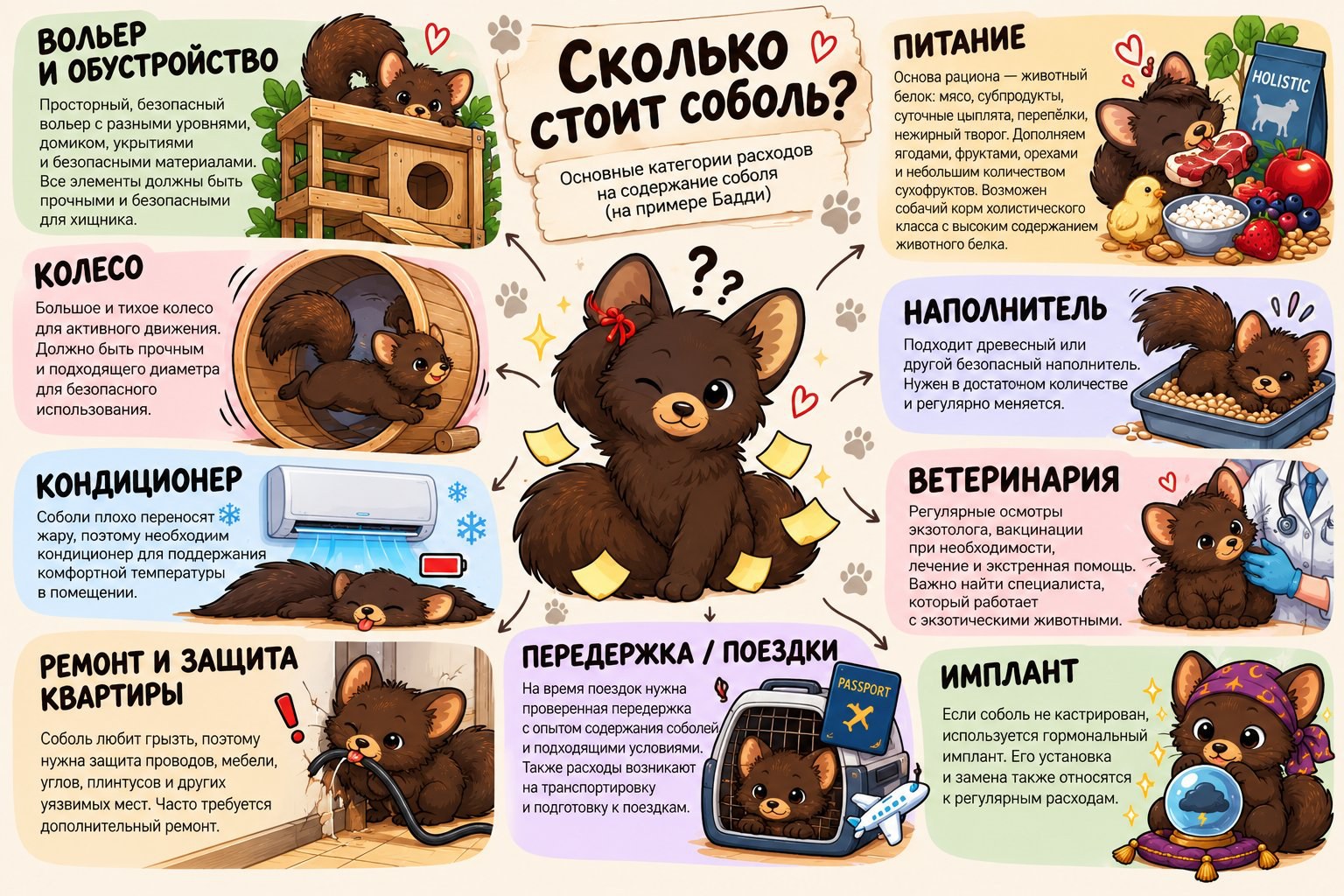
Money. The animal himself is the smallest line in your budget. You bought him once and forgot about it. Then the real thing begins. The enclosure, shelves, wheel, kennel — that is right away, and it is not supermarket furniture. An air conditioner, because in summer it is a condition of survival, not comfort. Meat, day-old chicks, quail, curd, liver, meat-and-bone meal, berries — every month, for the animal's whole life. A separate fridge or freezer for all of it. Litter. The Suprelorin implant every season, and that is for life, not a one-time thing. An exotics vet, who by definition is never cheap. And the gnawed-through wires, the ruined furniture, the dug-through sofa — that is also an expense item; you just did not plan it.
Time. Every day. Not “when I'm in the mood.” Feeding proper food, not pouring dry kibble and leaving. Cleaning up after an animal that marks and stashes. Walks around the flat under your supervision, because unsupervised he will find himself an adventure. Claw trimming. The vet. And on top of that what nobody writes about: the years in which you simply adapt. He is crepuscular, he does not sleep at 7 a.m. (the young ones may not sleep at 3 either), he has his summer, he has his moult, his cupboard was not opened. Consider that you have acquired a creature around which your home will be entirely rebuilt.
Holidays and travel. And here is the unpleasant truth. You cannot hand a sable to a friend for a week. You cannot board him somewhere that takes cats. He needs a person he accepts, and by definition he has few of those — remember, a loner for whom even one friend is a lot. An exotics vet who will agree to be on backup is not in every city either. Take him with you? We analysed what that costs: chip, vaccinations, papers — and the sable is not even on the list of familiar animals, and every country decides about him itself. So honestly: with a sable your trips will become harder, and you will be nervous, because you know your furry-bum and you know what he is capable of. And at night on a Bali beach you will wake up in a sweat because you dreamed that right now your animal, under supervision, ate an earplug. Or climbed out the window. Or got under the washing machine and gnawed off the hose. Or the air conditioner in the flat died and it is thirty-five degrees outside. Some owners simply stop travelling.
And the main figure. The animal lives 10 to 16 years in captivity (in the wild, by the way, 7 on average). This is not a dog that will live twelve years with you, of which you roughly imagine the shape. This is a decade and a half of life with a predator who is wild by design and who will be changing character right along the way.
Try it on yourself. Where will you be in ten years? And in sixteen? A different job, a different country, a different family, children. The animal will travel together with all of this, and he will not be the one adapting. And the worst part, those very three-to-five years, will fall right in the middle, when there is no way back.
So now, knowing all this — decide.
36.Common Owner Mistakes
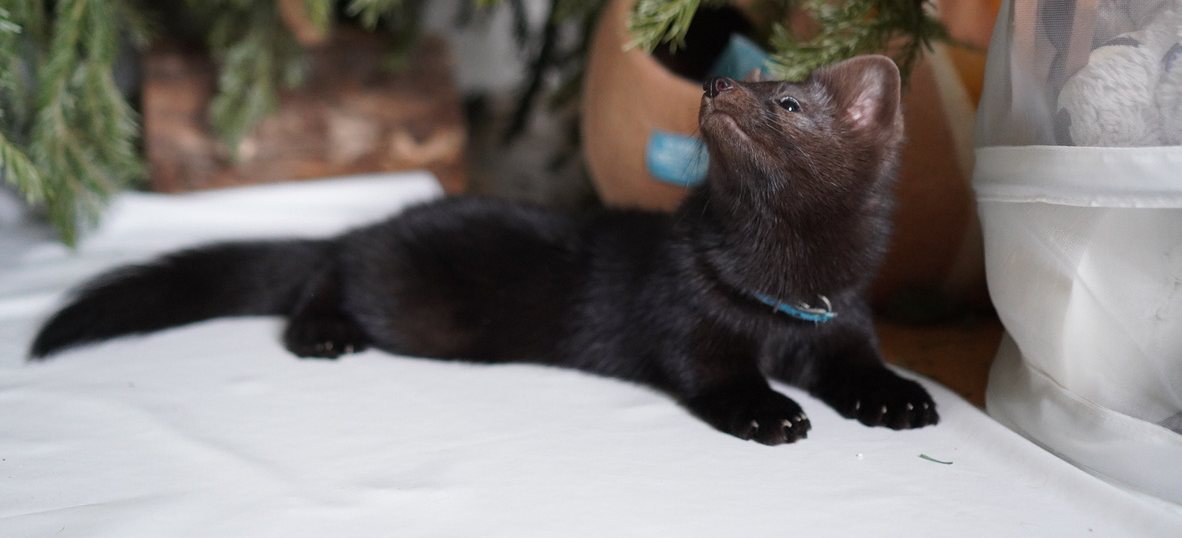
I have nothing to do with any of this.
Stretched. Means he broke nothing.
Vase? What vase?
And finally — a short list of what everyone trips over. If you have read this far and remembered nothing, remember at least this.
Bought a small cage. A cage is a prison cell. In it the animal screams, chases you off and goes wild. In a big enclosure that same animal is calm. The difference is only whether he has somewhere to retreat.
Did not install a wheel. Half the craziness and half the future aggression could have gone there. It did not — it will come to you.
Feed him like a cat. A cat's diet does not suit a sable. And the habits are laid down in the first year, and afterwards you will not replay anything.
Did not feed him in the evening and are surprised by the night races. A fed sable is a sleepy sable.
Cleaned out all the stashes. You tidied up, and the animal learned that he will not survive the winter. Leave him his supplies.
Did not make a dark corner. A crepuscular animal who has nowhere to hide all day is a nervous animal. And the character spoils from the same place.
Expect him to stop marking. He will not. A mark is his speech, not an outrage. Give him territory, and the marks will gather in one place.
Did not install an air conditioner. Overheating kills a sable faster than everything else in this guide. This is not about comfort; it is about life.
Did not vaccinate. Canine distemper is lethal for mustelids. Rabies — because he will escape, and the neurological symptoms of an unvaccinated animal look exactly like rabies, and the clinic may simply refuse to take you.
Got two. Sables are not neighbours. One day the game will stop being a game, and you will not notice it.
Hit the animal. The most expensive mistake of all. You will get it back at three years, with interest, and almost everything we analysed about stealth aggression grows from here.
Showed fear. The adult animal tests the boundaries. Got scared — he decided he won and the territory is his.
Did not understand seasonality. Summer is the rut. Spring is the moult. Autumn is stashes. He has not broken down and has not stopped loving you; he simply has a season.
Try to re-educate an adult sable. Will not work. Everything you could lay down is laid down in the first year. After that you do not educate — you negotiate.
And the main mistake, from which all the others grow. Got a sable thinking he is some kind of exotic cat. He is not a cat. He is a loner who is wild by design, with whom you will live ten to sixteen years, and you will be the one adapting.
But if you have read all this, understood it and are still ready — welcome. It is worth it.
Buddy Approved
See everything we actually use — nothing more, nothing less.
Explore the Pet Shop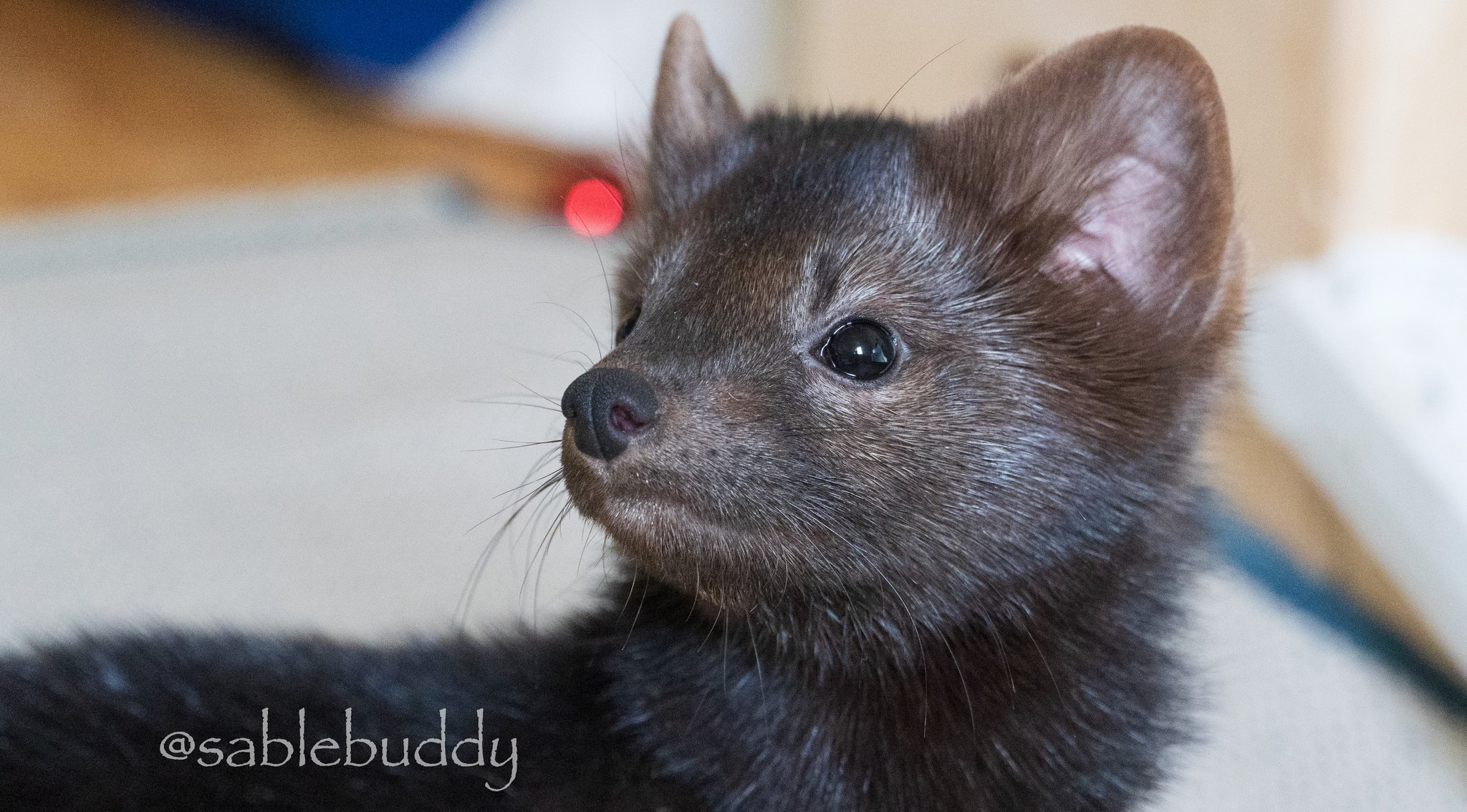
5.The First Months: The Socialisation Window
Games are very important for a sable.
The success of socialisation, and how much time it will take you, depends heavily on when the sable came to you. If the pup came to you in the window from one month to one and a half months of age, everything will be fairly simple. If the animal was already over two months old, the situation will be different.
Ideally, you take the sable from the fur farm or breeder before it opens its eyes, or right after. In the first month of life. Then you are one of his own from the very beginning. He is not afraid yet, not wary, not expecting a trick. Trust in hands, in your smell, in your voice forms as if by itself, without struggle or persuasion.
If the sable has already opened its eyes, you can still take him. But here it is important to understand a simple thing: every following week works against you. The later he came to you, the more you will have to work. This does not mean all is lost. It means socialisation will go more slowly and will demand more consistency and patience from you.
We took Buddy later. He was already two months old. And we had a hard time of it. This is exactly the case where the window had almost closed, and everything that falls into place by itself for early pups, we had to build step by step.
Up to five months, the foundation is laid most easily. It is in this period that the sable's base of relations with humans forms: whom to trust, where food comes from, with whom it is interesting and safe. If you took the sable at this age, you have the time and the opportunity to lay a good foundation.
After five months you can work too. You can change behaviour, adapt, build on what did not come together. But it will already be a bit harder. The reason is simple: the basic connections have already formed, and retraining is always harder than teaching from scratch. It is not that the sable is bad or spoiled.