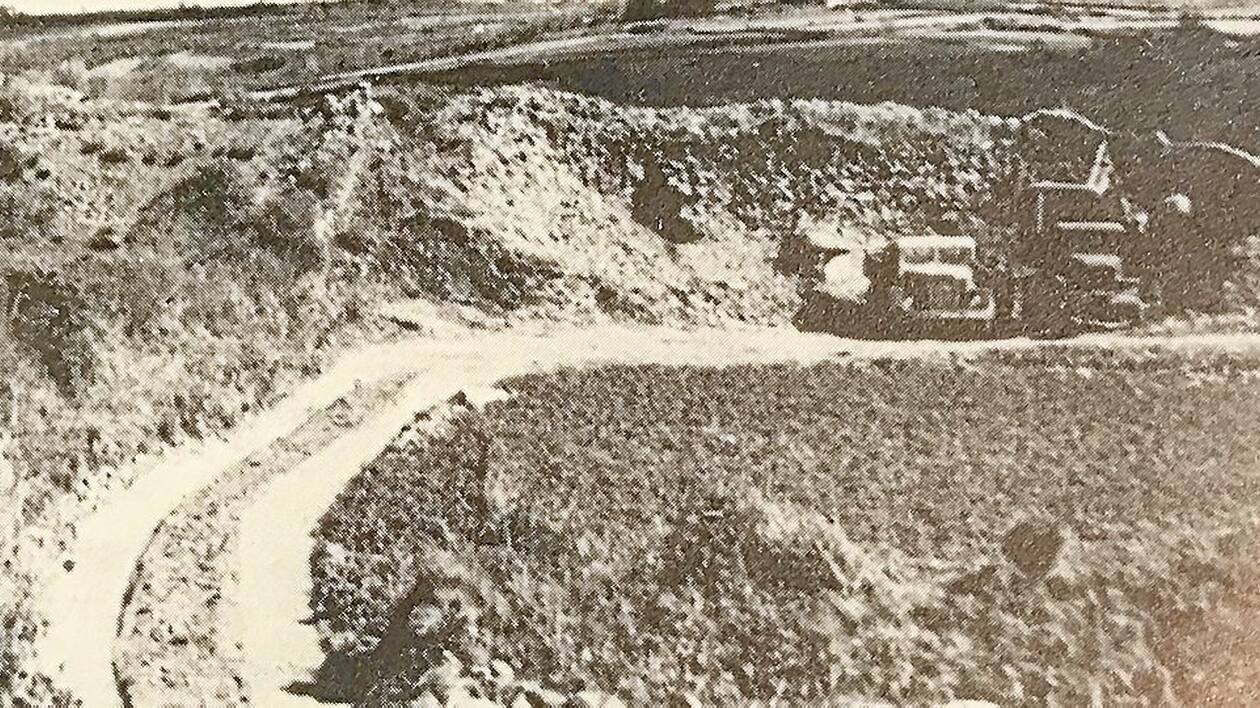
In 1954, a construction company was tearing apart a large stone mound in Plouezoc'h, Brittany. The excavator bucket struck a stone slab the size of a garage. Beneath it was a chamber tall enough to stand in. The workers realized something was wrong and tried to report it to their boss. But instead of sending someone to inspect it, he gave a strange order: demolish faster.
To understand why, we need to go back a few months.
The mayor of Plouezoc'h had decided to build a road between the bourg and Terenez to bring more tourists to the area. To keep costs down, he told the construction company to take stone from the Barnenez mound. That pile of rock had bothered him for years.
In the autumn of 1954, an excavator began tearing into the strange hill. One December evening, its bucket struck an enormous stone slab. It rested on a circular wall and sealed a hollow space. Behind the slab was a stone chamber, and from it a narrow passage disappeared into the darkness of the mound. The workers peered inside, lighting the space with their lighters. They had no idea how ancient the structure was, but they understood one thing: it was connected to burial traditions, ancient ones. In Brittany, everyone had seen dolmens. Everyone knew what they had been built for and that places like this were better left undisturbed.
Dolmens are ancient megalithic tombs made from massive stone slabs. Usually several upright stones form the walls, with a large slab on top as a roof. Most were built during the Neolithic period in Europe and used for burials, sometimes collective ones. Originally many were covered by mounds of earth or stones, so the familiar stone table we see today is often just the exposed skeleton of a once-covered tomb.
The workers told their manager, but the managers didn't care. The land had been bought, the road had to be built, and they needed the stone. The order was simple: work faster.
Some workers couldn't leave it at that. Eventually word reached the local priest. The priest of Plouezoc'h had no power to stop the work: the land was privately owned, the mayor had approved the project, and the contractor was operating legally. But he couldn't stay silent. He wrote an article for a local newspaper to draw attention to the discovery: “An underground hall of the old feudal castle of Barnenez has been found.” He had no idea what secrets this “castle” was actually hiding.
On May 21, 1955, Francis Gourvil, a journalist for Ouest-France in Morlaix, read the article. He wasn't just a reporter; he knew Breton history well and immediately understood that there couldn't be any feudal castle inside that mound. He went to Barnenez.
What he found horrified him. A fifth of the mound was already gone. Chambers had been ripped open, ancient masonry lay scattered around, and the stones that had lined the walls were being crushed into road gravel. Gourvil understood that in a few more days there would be nothing left to see. He began writing articles and sent them to the professor who headed the Brittany Prehistoric Antiquities Service. It was his last hope of stopping the destruction.
Professor Pierre-Roland Giot received the letter and immediately understood that the “feudal castle” was not a castle at all. It was an enormous prehistoric cairn. But even he didn't yet know how ancient it was.
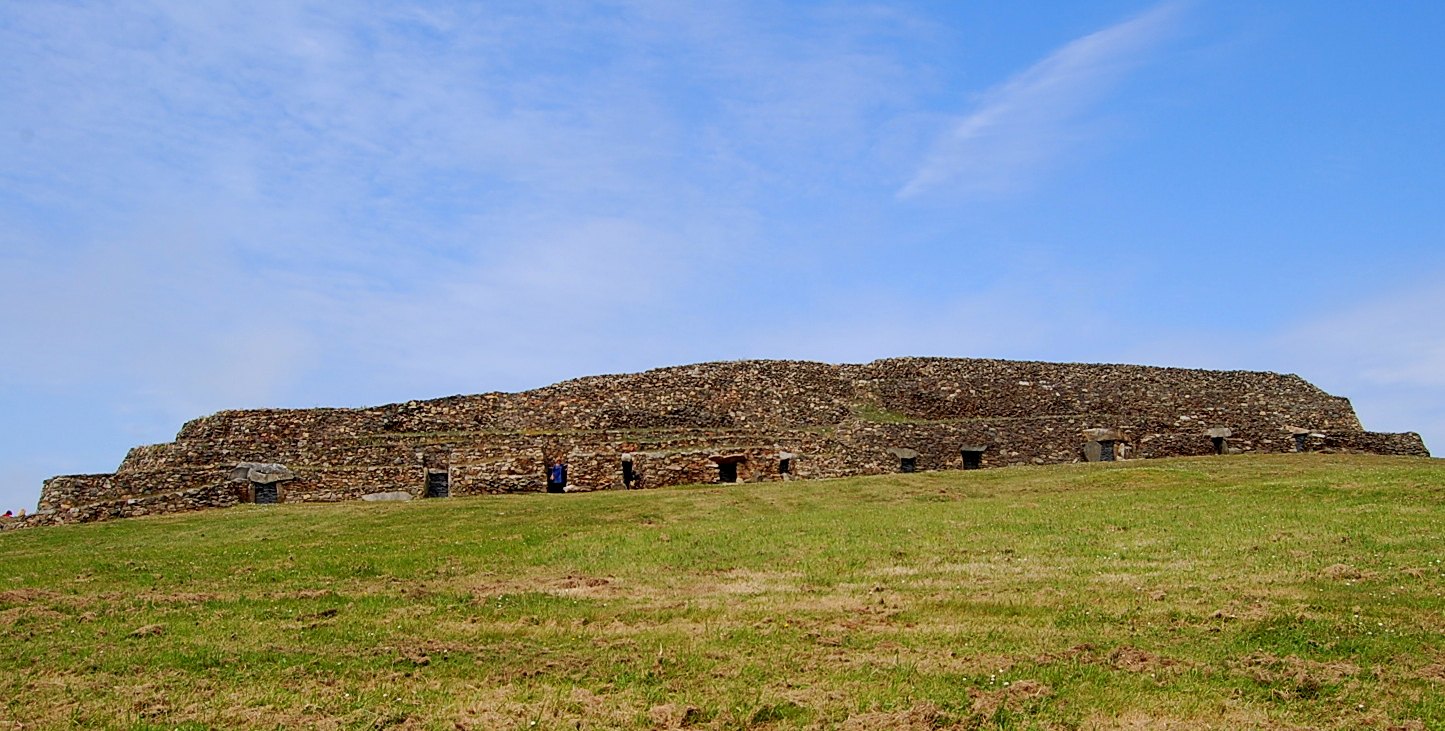
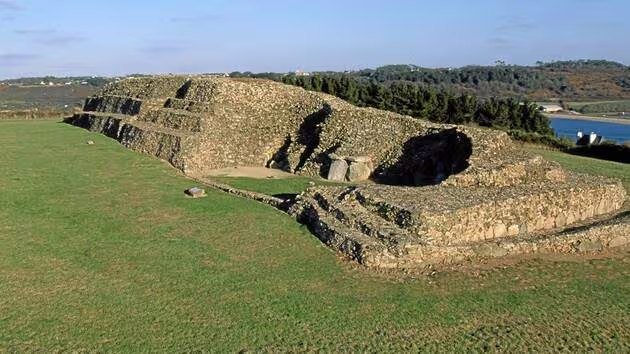
On May 31, 1955, the sub-prefect of Morlaix ordered the work to stop, but it was already too late. A large part of Barnenez had been destroyed. There was no point in simply closing the mound. The destroyed section offered a rare chance to see how the cairn had been built from the inside. So they decided to leave it open rather than reconstruct it.
Excavations directed by Giot between 1955 and 1958 revealed that the monument was actually made of two adjoining cairns, built in two main phases. The eastern part, the older one, was erected between 4850 and 4250 BC. The western part was added between 4450 and 4000 BC. In total, the monument contains eleven passage graves, each with its own corridor leading to a burial chamber.
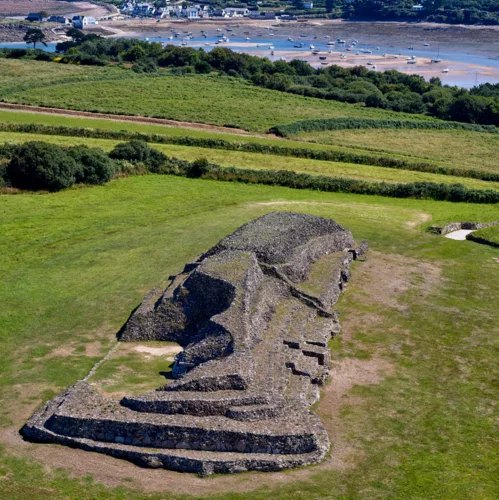
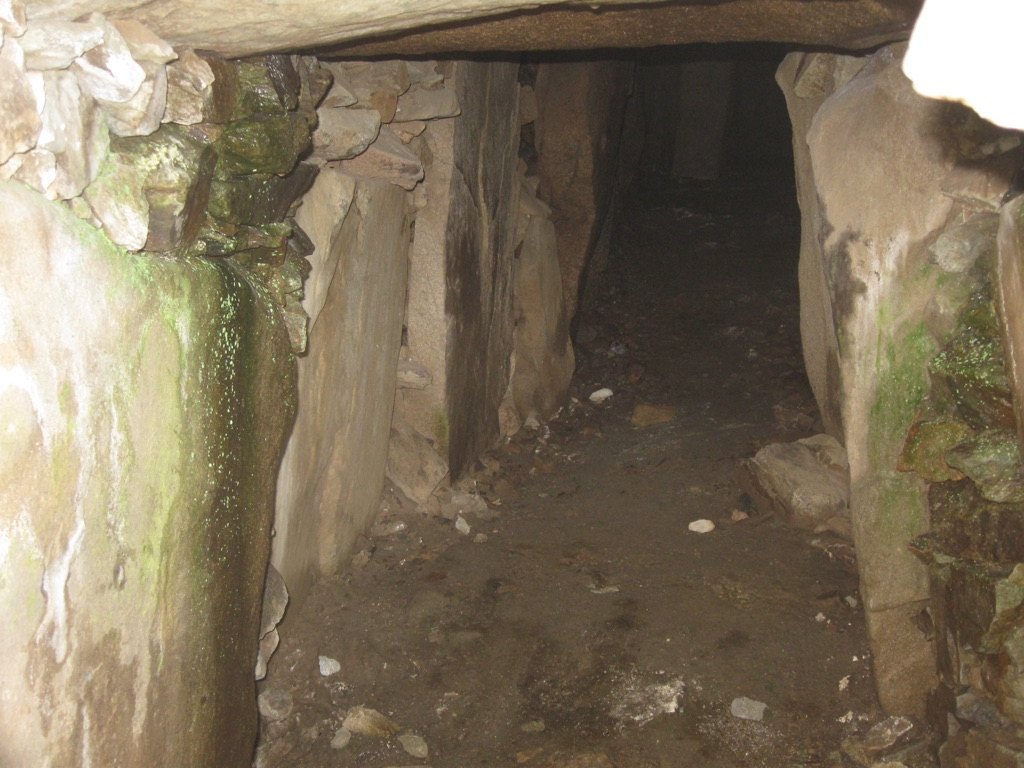
The monument is enormous: 72 meters long, up to 25 meters wide, and originally about 8 to 9 meters high. It contains roughly 6,500 to 7,000 cubic meters of stone, weighing an estimated 12,000 to 14,000 tonnes.
Radiocarbon dating showed that construction at Barnenez began roughly 2,000 years before the pyramids of Giza. This makes it one of the earliest megalithic monuments in Europe and one of the oldest man-made structures in the world.
Almost nothing remained of the people buried there. The acidic soil had dissolved their bones. Only fragments of burned bone survived from those who had been cremated. Inside the chambers, archaeologists found images of birds, snakes, idols, and a goddess figure, whose meaning remains a mystery. The monument is also remarkable for its megalithic art: engraved symbols, including “shield idols,” V-shaped signs, and polished axes. Traces of black and red paint have also been found, suggesting the stones were once painted.
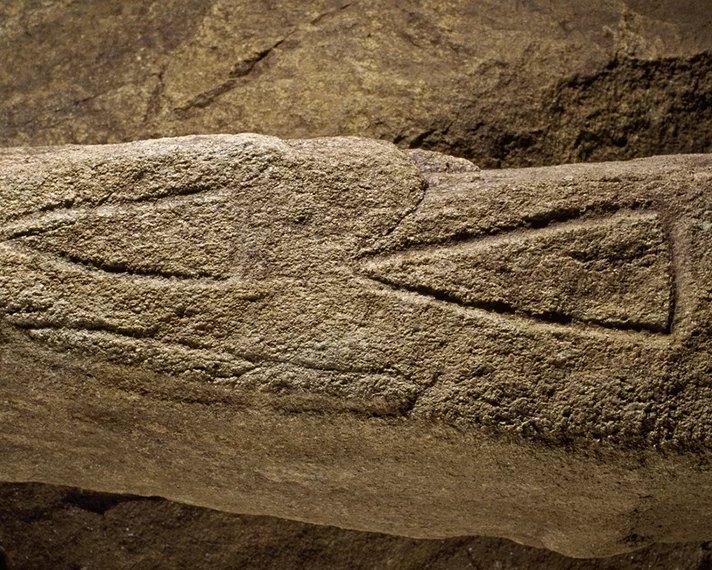
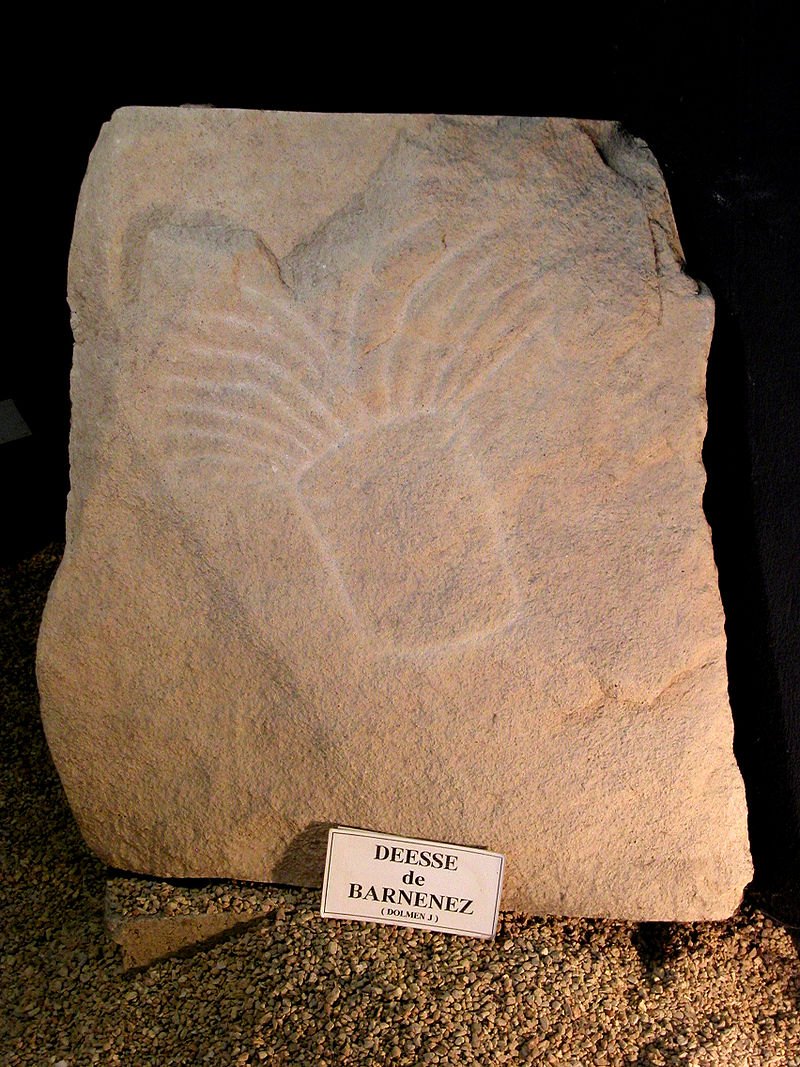
The objects discovered during excavations were few but varied: pottery sherds, polished stone axes, flint blades, and arrowheads.
The company was found guilty of violating the law on archaeological excavations. It was fined 12,000 francs and ordered to pay for the monument's restoration and stabilization. In the end, the dead did punish those who disturbed them. And the punishment was very material.
Today the Cairn of Barnenez is a protected historical monument. It has been nicknamed the “Prehistoric Parthenon” and is considered the largest megalithic mausoleum in Europe. Its survival is owed to a chain of unlikely heroes: a worker who couldn't stay silent, a priest who wrote an article, and a journalist who understood what he was looking at before it was too late.